
What's Happening?
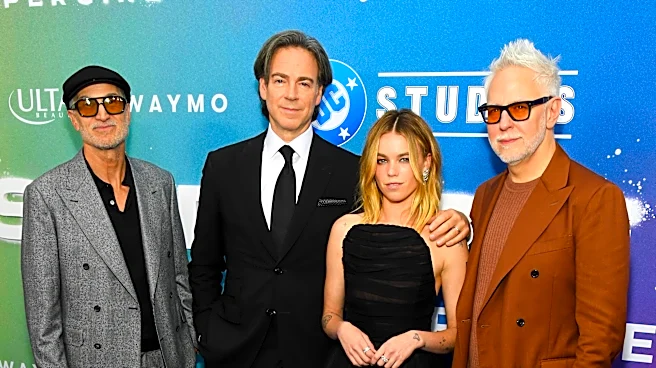
Milly Alcock, an Australian actress, starred in DC Studios' film 'Supergirl,' which garnered a lackluster reception with only 52% positive reviews on Rotten Tomatoes. Critics often cited a disjointed tone
in the movie. In contrast, another DC Studios release, the R-rated horror film 'Clayface,' achieved a more successful reception, boasting 77% positive reviews. Both films earned praise for their lead performances, with Alcock specifically noted for her role in 'Supergirl.' 'Clayface' also demonstrated a stronger return on investment, having a much smaller budget than 'Supergirl' despite both films grossing $126 million globally. This success has reportedly led DC Studios to explore more R-rated projects focusing on darker aspects of the DC lore.
Why It's Important?
The contrasting receptions of 'Supergirl' and 'Clayface' highlight a significant trend within the U.S. film industry, particularly for major studios like DC. The success of 'Clayface' in the R-rated horror genre, coupled with its strong return on investment, suggests a potential shift in strategy towards more niche, adult-oriented content. This could influence future production decisions, leading to a diversification of superhero-related films beyond traditional PG-13 offerings. For actors like Milly Alcock, navigating these varied project outcomes is crucial for career trajectory, as critical reception and box office performance directly impact future opportunities. The exploration of darker DC lore also indicates a response to audience demand for more mature and standalone narratives, potentially impacting the creative direction of the entire franchise.
What's Next?
Following the success of 'Clayface,' DC Studios is reportedly considering expanding its slate of R-rated movies that delve into the darker corners of its lore. This strategic shift could lead to the development of new projects, potentially including films like James Mangold's 'Swamp Thing' or a 'Justice League Dark' movie, which have been subjects of interest among filmmakers. The digital release of 'Clayface' in December, shortly after its theatrical run, also reflects current industry trends in content distribution. The leadership changes at DC Studios, with James Gunn and Peter Safran reportedly leaving their roles, could further influence the studio's future project selections and overall creative vision, potentially leading to a complete reimagining of their cinematic universe.
Beyond the Headlines
The divergent outcomes for 'Supergirl' and 'Clayface' underscore a broader industry challenge in balancing critical acclaim with commercial success, especially within established franchises. The positive reception and financial efficiency of 'Clayface' suggest that audiences are receptive to standalone, R-rated narratives that deviate from the interconnected universe model often seen in superhero films. This could encourage studios to take more creative risks and explore diverse genres within their intellectual properties, potentially leading to a richer and more varied cinematic landscape. The emphasis on 'darker corners' of DC lore also reflects a cultural appetite for complex, morally ambiguous storytelling, moving beyond traditional heroic archetypes and potentially influencing the types of characters and themes explored in future adaptations.