





What's Happening?
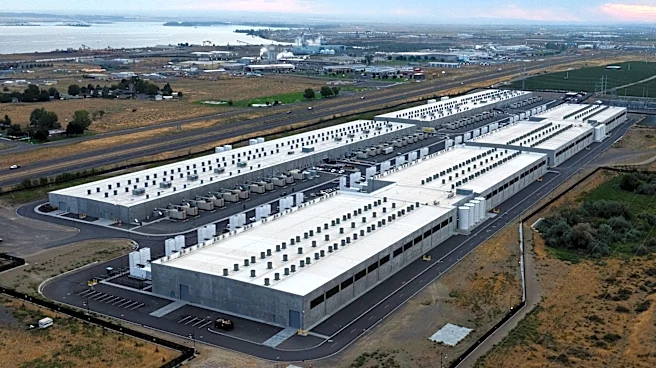
Illinois Governor JB Pritzker has paused new tax incentives for data centers, effective July 1, in response to rising electricity bills. This decision comes during a significant infrastructure boom, where other states are actively courting data center projects.
The paused incentive program previously offered a sales tax exemption for data centers investing at least $250 million, creating 20 jobs, and meeting clean-energy commitments. Illinois has seen substantial tax benefits from this program, with $983 million in tax benefits for 27 approved applications and $1.85 billion in state and local tax revenue in 2023. However, the pause creates uncertainty for future investments, as companies are currently choosing sites and signing deals. Illinois risks losing out on a historic economic opportunity as other states continue to offer incentives.
Why It's Important?
The pause in tax incentives could have significant economic implications for Illinois. Data centers represent a strategic fit for the state, given its power resources and skilled labor force. The industry promises to bring new power infrastructure, potentially stabilizing the grid and easing ratepayer bills. Additionally, data centers contribute substantial tax revenue, as seen in other regions like Loudoun County, Virginia. The decision to pause incentives could deter investment, leading to missed opportunities for job creation and economic growth. With the AI industry projected to see capital expenditures reach $5.5 trillion by 2030, Illinois's decision could result in the state being sidelined in a competitive investment cycle.
What's Next?
Illinois may need to reconsider its approach to data center incentives to remain competitive. The state could revise the program to require data centers to finance their power needs and report water usage publicly. As other states continue to refine their rules around power and cost allocation, Illinois must decide whether to re-engage with the industry or risk losing out on future investments. The decision will likely impact the state's economic landscape and its ability to attract high-tech industries.