





What's Happening?
Retailers are increasingly relying on real-time data streaming to effectively manage the complexities and pressures of the extended Black Friday shopping period, which has evolved from a single day into a month-long event. Peter Pugh-Jones, EMEA Field
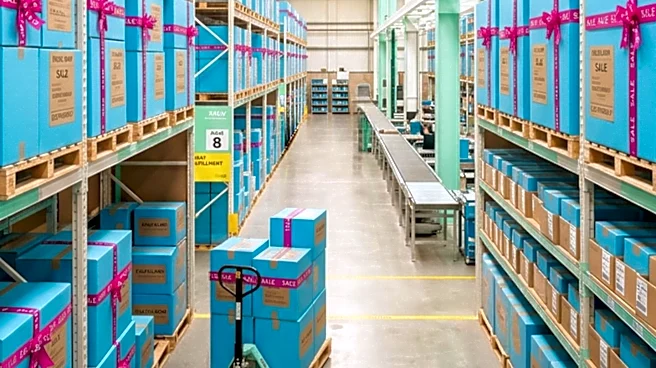
CDO at Confluent, highlights how data streaming helps businesses like Victoria’s Secret maintain operational alignment during peak sales. The challenge for retailers is to prevent discrepancies between order spikes and warehouse inventory, which can lead to unfulfillable sales and customer dissatisfaction. Data streaming provides a continuous flow of updates on business events, such as orders placed or stock received, allowing various systems (e.g., ordering, stock, fulfillment) to update simultaneously. This ensures that decisions are made with the most current information, minimizing the time between an event occurring and the business's response. For instance, a store sale can instantly update online stock numbers, or a warehouse delay can prompt a review of delivery commitments, enabling agile adjustments to demand and supply.
Why It's Important?
The ability to process and act on real-time data is crucial for retailers to navigate the intense demands of Black Friday and similar peak trading periods. Without it, businesses risk operational inefficiencies, customer dissatisfaction due to unfulfilled orders, and financial losses. Real-time data streaming allows retailers to maintain accurate inventory levels across all channels, optimize fulfillment processes, and dynamically adjust to fluctuating customer demand. This agility is vital in a competitive market where customer expectations for speed and accuracy are high. Companies that effectively implement data streaming can gain a significant competitive advantage by improving operational efficiency, enhancing customer experience, and making more informed business decisions. The insights gained from real-time data during these high-pressure periods can also be leveraged to strengthen overall business responsiveness throughout the year, leading to sustained improvements in supply chain management and customer service.
What's Next?
Retailers looking to adopt or enhance their data streaming capabilities are advised to start with basic tests on critical workflows, such as order-to-stock updates, to ensure data arrives with sufficient context and timeliness. Subsequent steps involve testing these flows under peak Black Friday volumes to identify potential bottlenecks and conducting recovery tests to assess system catch-up after interruptions. Furthermore, establishing clear responsibilities for who acts when critical updates are delayed or incomplete is essential for effective incident response. The insights and infrastructure developed for Black Friday can then be extended to support a more responsive business model year-round. This continuous improvement approach will enable retailers to adapt to evolving market conditions and consumer behaviors, moving beyond seasonal preparedness to a state of perpetual operational agility. The trend suggests a broader adoption of event-driven architectures across the retail sector to maintain competitiveness and customer loyalty.
Beyond the Headlines
The reliance on real-time data streaming for peak sales periods like Black Friday underscores a fundamental shift in retail operations towards a data-driven, agile paradigm. This evolution moves beyond traditional batch processing to a continuous flow of information, transforming how businesses perceive and react to market dynamics. The ethical implications include ensuring data privacy and security as more real-time customer and operational data is collected and processed. Legally, compliance with data protection regulations becomes even more critical with the increased velocity and volume of data. Culturally, it necessitates a shift within organizations towards a more proactive, data-literate workforce capable of interpreting and acting on real-time insights. This technological advancement is not just about managing sales spikes but about building resilient, responsive businesses that can thrive in an increasingly dynamic and unpredictable global marketplace, fundamentally altering the relationship between retailers, their supply chains, and their customers.