







What's Happening?
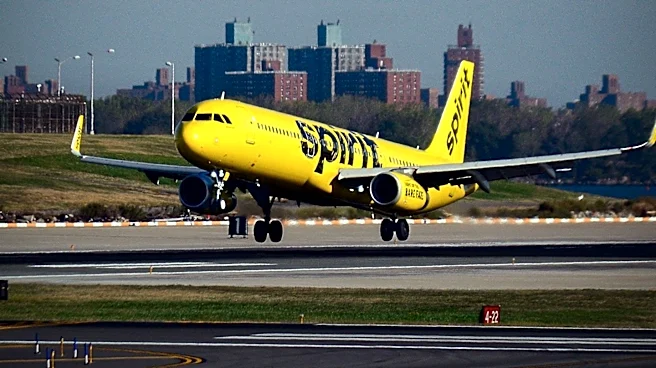
Spirit Airlines ceased all operations on May 2, 2026, following the collapse of a proposed bailout. The airline had previously filed for bankruptcy protection twice. According to Spirit CEO Dave Davis, the airline required hundreds of millions of dollars
in additional funding to continue operating, primarily due to surging fuel prices. This cessation of operations marks the end for the budget carrier, which had struggled to maintain financial viability amidst challenging market conditions. The airline's business model, which did not hedge fuel purchases, left it particularly vulnerable to price fluctuations, a factor that significantly contributed to its financial distress and ultimate shutdown.
Why It's Important?
The shutdown of Spirit Airlines has significant implications for the U.S. airline industry and consumers. As a budget carrier, Spirit Airlines offered competitive fares, and its absence will likely reduce low-cost travel options, potentially leading to higher prices for consumers on routes it previously served. The event highlights the precarious financial state of some airlines, particularly those with business models sensitive to external economic factors like fuel costs. For the broader industry, it underscores the challenges of operating in a highly competitive and capital-intensive sector, where even established players can succumb to financial pressures. This situation could also lead to a reallocation of market share among remaining carriers, potentially benefiting larger airlines that are better equipped to absorb rising operational costs.
What's Next?
The immediate consequence of Spirit Airlines' cessation of operations is the disruption for passengers who had booked flights with the airline. These travelers will need to find alternative arrangements, likely at higher costs, and seek refunds for their canceled tickets. For the airline industry, the event may prompt a re-evaluation of risk management strategies, particularly concerning fuel price hedging. Competitors will likely assess the routes previously operated by Spirit Airlines to determine potential expansion opportunities. The regulatory bodies may also review the circumstances leading to the shutdown to identify any systemic issues or necessary policy adjustments to prevent similar occurrences in the future.
Beyond the Headlines
The collapse of Spirit Airlines reflects a broader trend of vulnerability within the budget airline sector, especially for carriers that do not employ financial instruments like fuel hedging. This event could lead to a consolidation within the low-cost travel market, potentially reducing consumer choice in the long run. It also raises questions about the sustainability of ultra-low-cost models in an environment of volatile operating costs. The ethical implications for passengers left stranded or out of pocket are significant, highlighting the need for robust consumer protection mechanisms in the event of airline failures. This situation may also influence future investment decisions in the aviation sector, with investors becoming more cautious about airlines with unhedged exposure to commodity price fluctuations.