



What's Happening?
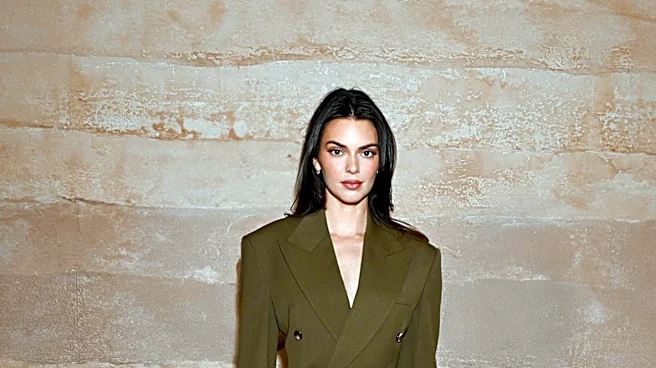
Milan Fashion Week recently concluded, highlighting a significant shift towards maximalist fashion, moving away from the 'quiet luxury' trend. According to senior fashion reporter Danny Parisi, international reporter Zofia Zwieglinska, and editor-in-chief
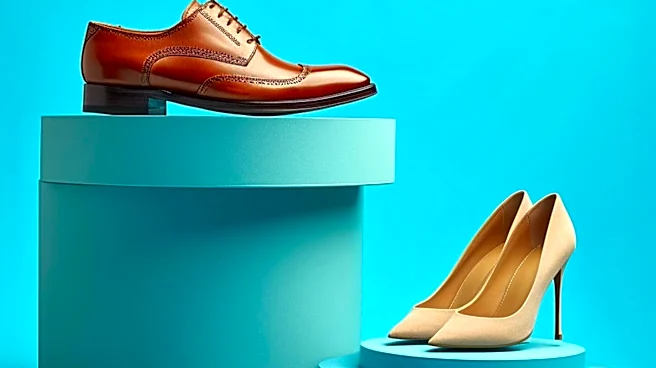
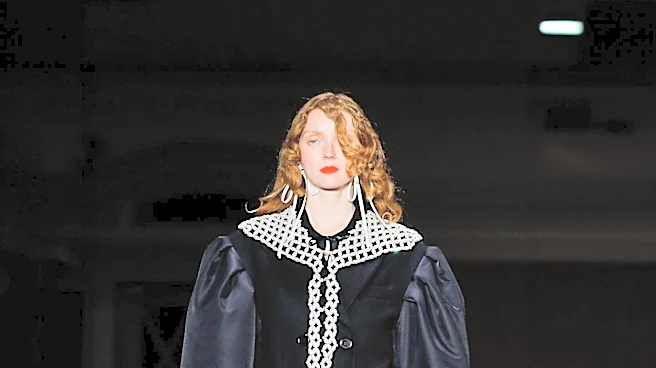
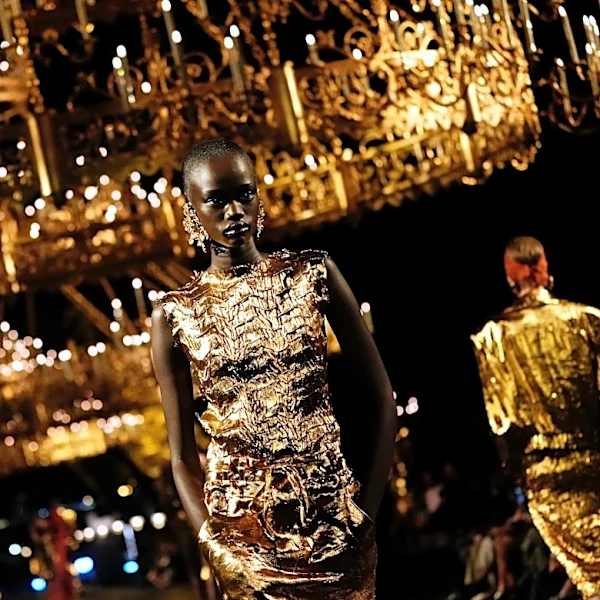
Jill Manoff on the Glossy Podcast, key themes included a 'more is more' ethos, experimental footwear, and innovative ways of integrating customers into the shows. Collections from designers like Jil Sander and Dolce & Gabbana featured multiple prints and patterns, embracing a sense of chaos and clash, with many looks appearing rumpled and imperfect. Footwear also saw bold experimentation, with jewel-encrusted high boots, fishnet and mesh sandals, and sandals with stacked flip-flop soles. Notably, there was a decline in interesting sneaker designs, with most experimentation focused on heels, flats, and sandals. Brands like Gucci and Moschino engaged customers by creating immersive experiences, such as Gucci setting up a fake store on its runway and Moschino featuring extras in everyday clothes walking alongside models.
Why It's Important?
This shift in Milan Fashion Week signals a potential broader trend in the fashion industry, impacting designers, retailers, and consumers in the U.S. The embrace of maximalism suggests a move towards more expressive and elaborate styles, which could influence purchasing decisions and inventory strategies for U.S. fashion businesses. The decline in sneaker innovation, a category that has seen significant growth in recent years, could lead to a re-evaluation of product development and marketing efforts for footwear brands. Furthermore, the integration of customers into fashion shows, as seen with Gucci and Moschino, could set a precedent for how U.S. brands engage with their audience, potentially leading to more interactive and experiential retail and marketing strategies. This approach aims to make collections more relatable and accessible, bridging the gap between high fashion and everyday wear, which could resonate with a wider consumer base in the U.S. market.
What's Next?
Following Milan Fashion Week, the fashion industry will likely observe how these maximalist trends and customer engagement strategies translate to other major fashion events, such as Paris Fashion Week and New York Fashion Week. U.S. designers and retailers will be closely monitoring consumer reception to these new aesthetics and approaches. We can anticipate a potential increase in demand for bold patterns, layered looks, and statement footwear in the coming seasons. Brands may also explore more interactive and immersive ways to present their collections, moving beyond traditional runway shows to create more engaging experiences for their customers. The success of these strategies in Milan could encourage U.S. brands to adopt similar tactics, potentially leading to a more dynamic and consumer-centric fashion landscape. The focus on making collections more 'sellable and accessible' could also lead to a greater emphasis on direct-to-consumer models and personalized shopping experiences.
Beyond the Headlines
The move towards maximalism and customer integration in fashion reflects deeper cultural and economic shifts. The rejection of minimalist perfection and the embrace of 'more is more' could be interpreted as a response to a desire for joy and self-expression in a complex world. Ethically, the focus on making fashion more accessible and relatable could challenge the traditional exclusivity of high fashion, potentially democratizing the industry. Legally, the innovative ways brands are engaging customers might necessitate new considerations for intellectual property and marketing regulations, especially as virtual and augmented reality become more prevalent in fashion presentations. Culturally, this trend could signify a broader societal shift towards individuality and authenticity, where consumers seek to express their unique identities through their clothing choices. This could lead to a more diverse and inclusive fashion landscape, moving away from uniform trends towards a celebration of personal style.