





What's Happening?
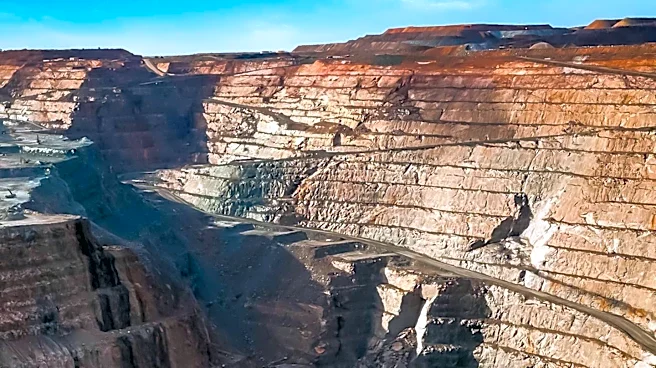
Sweden is at the forefront of redefining the mining industry through the integration of electrification and automation, exemplified by Boliden’s Rävliiden mine. This initiative, a collaboration between Boliden, ABB, Epiroc, and other Swedish technology
companies, aims to create the world's first fully electrified and autonomous underground mine. The shift is driven by the increasing difficulty of accessing easily exploitable ore bodies, pushing mining operations deeper underground where higher temperatures, increased rock stress, and complex ventilation requirements elevate costs and operational risks. Automation is becoming a necessity not only for safety, as deeper mines become too dangerous for human presence near production areas, but also for cost efficiency, productivity, and profitability. The project integrates electrification, automated charging infrastructure, fleet management, and digital control systems into a single operating environment, optimizing both production and energy consumption in real time. Artificial intelligence and cloud-based analytics are crucial components, allowing operators to balance production schedules, electricity demand, and renewable energy integration across the entire mining operation.
Why It's Important?
This development in Sweden holds significant implications for the global mining industry, including potential impacts on U.S. mining operations and technology providers. As the International Energy Agency projects a tripling of critical mineral demand by 2030 and a quadrupling by 2040 for net-zero emissions, the need for more efficient and sustainable mining methods is paramount. The Swedish model demonstrates a pathway to meet this demand by overcoming the challenges of deeper, more complex mines. For U.S. industries, this could mean increased pressure to adopt similar advanced technologies to remain competitive and meet environmental standards. Companies involved in mining equipment, automation, and AI in the U.S. could see new opportunities for innovation and market expansion. Furthermore, the reduction in CO2 emissions and operational costs through electrification and automation could influence U.S. policy discussions around sustainable resource extraction and energy transition, potentially leading to new regulations or incentives for adopting green mining practices. The emphasis on safety in autonomous operations also sets a new benchmark that could impact labor practices and safety standards in U.S. mines.
What's Next?
The success of projects like Boliden’s Rävliiden mine is expected to serve as a blueprint for future mining operations globally, including in the U.S. The collaborative ecosystem developed in Sweden, involving mining operators, equipment manufacturers, software developers, and universities, could inspire similar partnerships in other countries. As these technologies mature and prove their commercial viability, there will likely be increased investment in converting existing mines to automated and electrified production, and in developing new, technologically advanced mines. Export credit agencies are playing a strategic role in financing this transition by providing guarantees that enable commercial banks to extend long-term financing, which could become a model for funding large-scale infrastructure projects in the U.S. The continuous development of AI and cloud-based analytics will further enhance the optimization of mining processes, leading to more resilient and efficient operations. This will also likely lead to a demand for a new skilled workforce capable of managing these integrated digital ecosystems.
Beyond the Headlines
The shift towards electrified and autonomous mining represents a fundamental transformation of an industry traditionally characterized by heavy machinery and manual labor. Beyond the immediate benefits of increased safety and efficiency, this evolution raises deeper ethical and societal questions. The reduced need for human presence in dangerous underground environments could lead to significant changes in mining employment, requiring a re-skilling of the workforce towards roles in technology management, data analysis, and remote operation. The integration of AI and cloud-based analytics also brings considerations of data security and the potential for algorithmic bias in operational decisions. Culturally, this could redefine the image of mining from a physically demanding, hazardous profession to a high-tech, digitally driven industry. The collaborative model fostered in Sweden, where innovation is validated in active mines before global deployment, highlights a new paradigm for industrial development that prioritizes real-world application and continuous improvement, potentially influencing how other U.S. heavy industries approach technological advancement and sustainability.