









What's Happening?
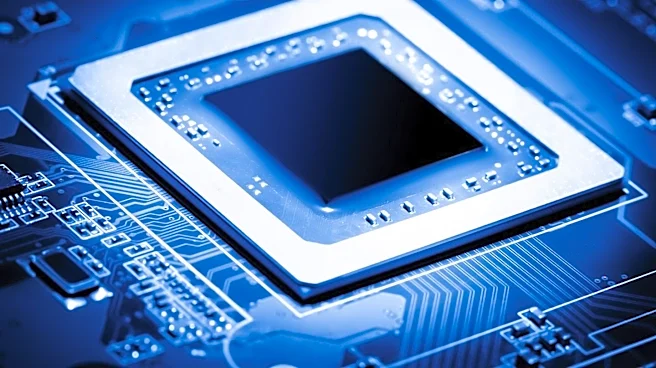
BAE Systems has announced that its Endura space microprocessor has successfully passed radiation tests, demonstrating its capability to operate in demanding environments faced by national security spacecraft. The Endura chip integrates multiple computing
functions into a single device, designed for use in satellites operating in space's harsh conditions. The chip was built using BAE's radiation-hardened technology and is produced at GlobalFoundries' secure facility in New York. The successful testing marks a significant milestone for military satellite programs seeking advanced onboard computing solutions.
Why It's Important?
The successful radiation testing of the Endura microchip is a critical advancement for military and defense applications, providing enhanced computing capabilities for national security satellites. This development supports the growing demand for more capable and reliable space-based systems, essential for strategic defense missions. The integration of multiple functions into a single chip reduces the complexity and weight of satellite systems, improving efficiency and performance. BAE's achievement positions the company as a leader in space technology, potentially attracting contracts and partnerships with defense agencies and prime contractors.
What's Next?
BAE Systems will continue to work with prime contractors to demonstrate the Endura chip's viability for missile defense and other strategic applications. The company plans to expand its family of next-generation space computing products, leveraging the Endura chip's capabilities. As the demand for advanced space technology grows, BAE is likely to focus on further innovations and collaborations to enhance its offerings in the defense sector. The successful deployment of the Endura chip in operational satellites will be a key milestone in validating its performance and reliability.