






What's Happening?
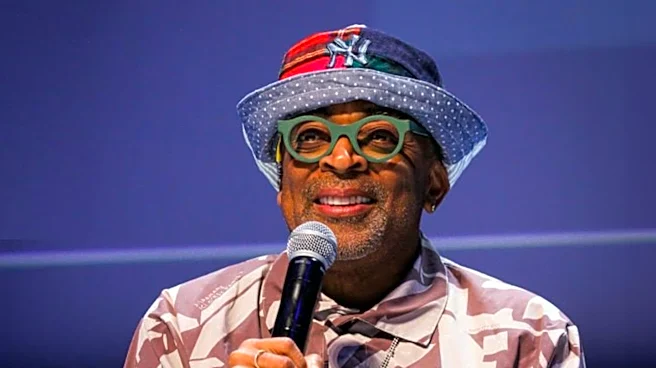
Filmmaker Spike Lee's works were among those introduced to South Africa during the post-apartheid era, thanks to the efforts of Liza Key, director of the Weekly Mail Film Festival. Key, described as a 'dizzying disruptor,' played a pivotal role in opening
up the country's film industry beyond apartheid. With the backing of the ANC's cultural commissars, she persuaded distributors to allow films by directors like Woody Allen and Spike Lee, which would have otherwise been banned, to be screened. The festival, which ran for seven years, was instrumental in challenging censorship and fostering a new generation of filmmakers in South Africa. Key's work extended to securing exemptions for controversial films and art, pushing the 'limits of liberty' in a transitional period.
Why It's Important?
The inclusion of Spike Lee's films in South Africa during this critical period signifies a broader cultural opening and a challenge to the restrictive censorship policies of the apartheid regime. Lee's work, often known for its social commentary and exploration of racial themes, would have offered South African audiences perspectives previously denied to them. This initiative helped to reintegrate South Africa into the global cultural landscape and provided a platform for diverse cinematic voices. The efforts of individuals like Liza Key were crucial in using art as a tool for social change and fostering dialogue in a society grappling with its past and future. The exposure to international cinema, including that of prominent American directors, contributed to the development of a more open and inclusive cultural environment.
What's Next?
While the immediate impact of Liza Key's work was the screening of previously banned films and the fostering of a new film industry in South Africa, the long-term implications continue to resonate. The precedent set by challenging censorship and promoting diverse voices in cinema has likely influenced subsequent cultural policies and artistic freedoms in the country. The legacy of the Weekly Mail Film Festival and Key's dedication to showcasing international filmmakers, including American directors like Spike Lee, could inspire future cultural exchanges and collaborations. The ongoing availability and appreciation of such films in South Africa reflect a sustained commitment to cultural openness and artistic expression, building upon the foundations laid during the post-apartheid transition.
Beyond the Headlines
The story of Spike Lee's films being shown in post-apartheid South Africa highlights the profound role of cultural exchange in political and social transformation. Beyond mere entertainment, these screenings represented a symbolic breaking down of barriers and an embrace of global narratives. The ethical dimension lies in the courage of individuals like Liza Key to defy censorship and advocate for artistic freedom, even in the face of political pressure. Culturally, the introduction of diverse cinematic perspectives helped to broaden the worldview of South African audiences, fostering empathy and understanding across different societies. This event underscores how art can serve as a powerful catalyst for change, contributing to a more informed and interconnected global community.