






What's Happening?
Many new knives, even expensive ones, tend to dull quickly not because of poor quality steel, but due to common user habits and improper care. The primary reasons include cutting on hard surfaces like glass, marble, or ceramic, which bend or chip the
blade's microscopic edge. Scraping food across the cutting board with the blade edge also contributes to dulling by rolling the edge out of alignment. Dishwashers are detrimental as they cause blades to rattle against other items, and harsh detergents can damage handles. Storing knives loosely in a drawer leads to nicks and chips from contact with other utensils. Additionally, using a knife for tasks it wasn't designed for, such as cutting frozen food or prying, can quickly damage the delicate edge. A common issue after sharpening is a leftover 'burr' or wire edge, which feels sharp initially but breaks off quickly.
Why It's Important?
Understanding the causes of rapid knife dulling is crucial for consumers to maximize the lifespan and performance of their kitchen tools. A sharp knife is not only more efficient but also safer, as it requires less force and is less likely to slip. For manufacturers and retailers, educating customers on proper knife care can enhance product satisfaction and reduce complaints related to perceived quality issues. This knowledge empowers users to maintain their knives effectively, reducing the need for frequent sharpening or replacement. Adopting proper habits, such as using appropriate cutting boards and storing knives correctly, can significantly improve the culinary experience and ensure long-term utility of kitchen investments.
What's Next?
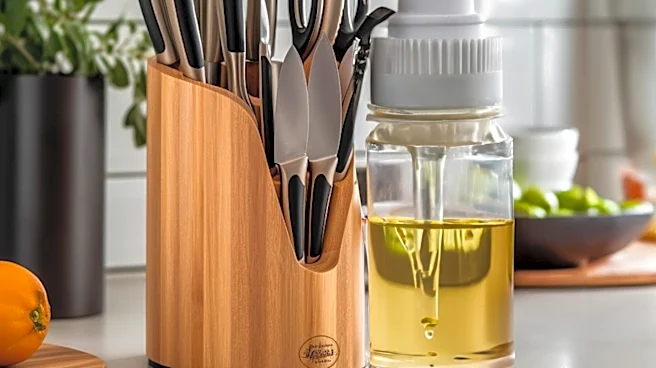
To combat rapid dulling, experts recommend a weekly five-minute honing routine to straighten the blade's edge, rather than grinding away metal. This involves using a honing rod at the correct angle for a few strokes per side. Sharpening, which removes metal to create a new edge, should be done less frequently, typically a few times a year for most home cooks, or when honing no longer restores sharpness. Users are advised to use cutting boards made of wood or soft plastic, avoid scraping food with the blade, hand wash and dry knives immediately, and store them in a block, on a magnetic strip, or in a sheath. These practices, combined with using the right knife for the right task, will help maintain the 'new knife feeling' for months.
Beyond the Headlines
The issue of rapidly dulling knives extends beyond mere inconvenience, touching upon aspects of sustainability and consumer education. By understanding and implementing proper care techniques, consumers can reduce waste associated with prematurely discarded tools and minimize the environmental impact of manufacturing and disposal. This also highlights a broader trend in consumer goods where product longevity is often tied to user knowledge and maintenance rather than solely inherent quality. The emphasis on honing over frequent sharpening also underscores a shift towards preventative maintenance, a principle applicable across various consumer products, promoting a more mindful and sustainable approach to ownership.