




What's Happening?
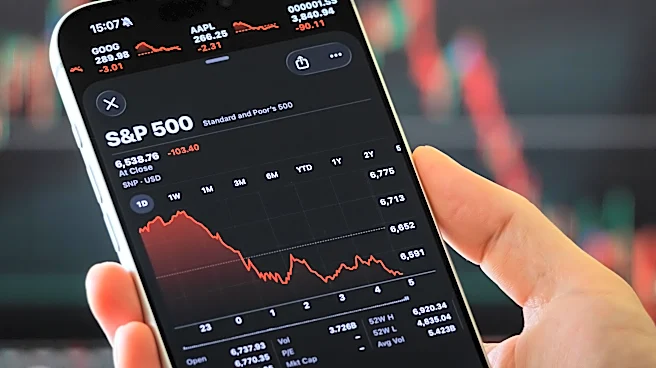
U.S. stock futures are showing significant gains on Monday, with Nasdaq 100 futures up 2.60%, S&P 500 futures climbing 2.13%, and Dow Jones futures advancing 1.43%. This rebound follows a challenging period for the technology sector, particularly semiconductors,
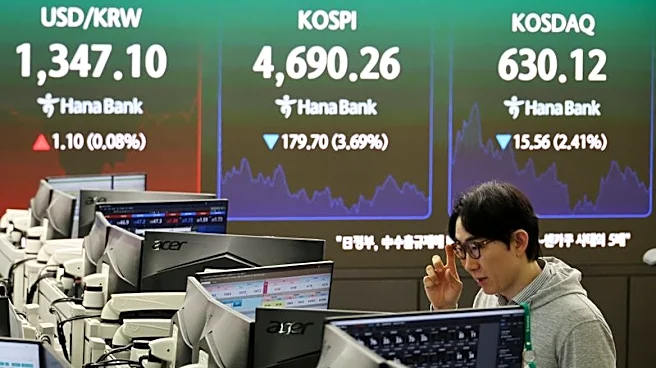
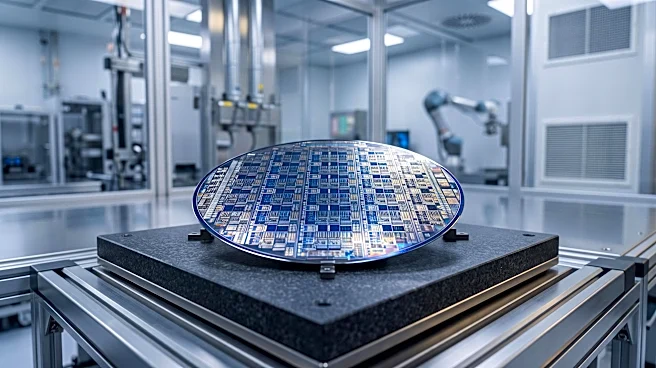
which experienced its worst day since 2020 on Friday. The market is also reacting to South Korea's announcement of emergency measures, including a KRW 10 trillion ($7.43 billion) Securities Market Stabilization Fund, to address its slumping stock market. Polymarket traders are bullish for the November 23 trading session, with an 88% chance predicted for a higher S&P 500 open. Monday's economic calendar includes the release of U.S. flash manufacturing and services PMI data at 9:45 a.m. ET, with no major corporate earnings scheduled before the opening bell, though Dell Technologies Inc., HP Inc., and Best Buy Co. Inc. are set to report later in the week.
Why It's Important?
The current surge in U.S. stock futures is significant as it indicates a potential stabilization and recovery in the market after a period of volatility, particularly within the technology sector. The rebound in index futures suggests investor confidence may be returning, despite recent concerns over AI-driven market routs and tighter U.S. export controls on AI chips to China. The S&P 500's performance is a key indicator of the broader U.S. economy, and a positive open could signal a more optimistic outlook for investors. The economic data releases, such as the U.S. flash manufacturing and services PMI, will provide crucial insights into the health of the manufacturing and services sectors, influencing future market sentiment and investment decisions. The actions taken by South Korea to stabilize its market also highlight the interconnectedness of global financial markets and the potential for international events to impact U.S. market dynamics.
What's Next?
The market will closely monitor the U.S. flash manufacturing and services PMI data released at 9:45 a.m. ET for further indications of economic health. Later in the week, corporate earnings reports from Dell Technologies Inc., HP Inc., and Best Buy Co. Inc. will provide insights into the performance of key companies and potentially influence sector-specific trends. Market analysts Ed Yardeni and Toby Hearst anticipate that the recent S&P 500 drop is a severe correction rather than the start of a bear market, as they do not foresee an impending recession. Yardeni, despite lowering his year-end S&P 500 target to 7,500, maintains confidence in a long-term 'Roaring 2020s' scenario, projecting the index to reach 10,000 by 2029. This long-term outlook suggests that while short-term fluctuations may occur, the underlying sentiment for sustained growth remains positive.
Beyond the Headlines
The recent market movements underscore the increasing influence of geopolitical factors and technological advancements on global financial stability. The 'AI Rout' and concerns over U.S. export controls on AI chips to China highlight the delicate balance between technological innovation, national security, and international trade. The sharp multiple compression in the Information Technology sector, particularly semiconductors, reflects a re-evaluation of valuations in a rapidly evolving technological landscape. Furthermore, the emergency measures taken by South Korea to stabilize its stock market illustrate the proactive steps governments are willing to take to prevent contagion and maintain economic confidence. This situation also brings to light the role of prediction platforms like Polymarket in gauging market sentiment, offering an alternative perspective on investor expectations. The long-term 'Roaring 2020s' projection by analysts suggests a belief in the resilience and adaptive capacity of the U.S. economy, even amidst significant sectoral shifts and global challenges.