





What's Happening?
The U.S. food industry is grappling with a significant disparity between rising input costs and stagnant food prices, leading to a squeeze on profit margins. While the August Producer Price Index (PPI) showed final demand food prices rising by a mere
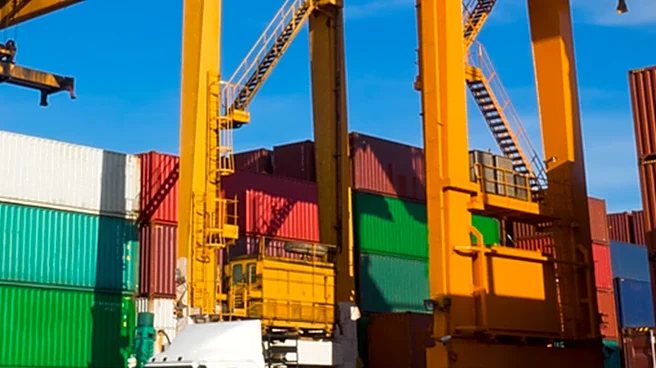
0.1%, and processed foods and feeds dropping by 1.2%, key operational costs have surged. Notably, No. 2 diesel fuel prices increased by 77.8% in the 12-month period ending in August. Other significant cost increases include plastic resins and materials (6.6%), containers for intermediate demand (5.5%), paperboard (5.1%), and supplies to manufacturing industries (10.8%). The Bureau of Labor Statistics (BLS) also reported that final demand energy prices surged 24.4% over the year. This situation means that while consumers and food buyers observe minimal inflation in food prices, food producers and plant controllers are facing steep increases in essential operational expenses like freight, energy, and packaging.
Why It's Important?
This divergence between input costs and output prices poses a critical challenge for the U.S. food industry, impacting its profitability and sustainability. Food producers are absorbing substantial cost increases for transportation, packaging, and manufacturing supplies, which are not being offset by corresponding increases in the prices they can charge for their products. This margin squeeze can lead to reduced investment in new lines and customers, potentially hindering innovation and growth within the sector. Furthermore, it can force businesses to make difficult decisions regarding staffing and operational efficiency. The inability to pass on rising costs to consumers, who are sensitive to food price changes, creates a precarious situation where producers must choose between maintaining market competitiveness and preserving financial health. This dynamic could also lead to supply chain vulnerabilities if producers are unable to sustain operations under increasing cost pressures.
What's Next?
To navigate these challenging economic conditions, food industry executives are being advised to implement contract clauses tied to specific input costs and measured by public indices. This approach aims to create transparency and allow buyers to verify price adjustments based on objective data, such as BLS series for diesel fuel or packaging materials. Such clauses would enable price changes to move in both directions, protecting producers when input costs rise and offering potential price reductions to buyers if costs decrease. The adoption of these index-linked clauses could become a standard practice, particularly for SKUs with volatile input costs, products under longer contracts, and private label or co-manufacturing agreements. This shift in contracting practices would help align expectations between producers and buyers, fostering more stable and predictable pricing mechanisms in the face of fluctuating operational expenses.
Beyond the Headlines
The current situation in the food industry highlights a broader economic phenomenon where certain sectors bear the brunt of inflationary pressures more directly than others. While consumer-facing prices might appear stable, the underlying costs of production are escalating, creating a hidden strain on businesses. This can lead to a 'silent inflation' for producers, where their purchasing power diminishes even if consumer prices remain relatively flat. The reliance on public indices for contract adjustments could set a precedent for other industries facing similar cost-price discrepancies, promoting greater transparency and fairness in supply chain negotiations. However, it also underscores the vulnerability of industries heavily dependent on energy and raw materials to global market fluctuations. The long-term implications could include a re-evaluation of supply chain resilience, a push towards more localized production to mitigate transportation costs, and increased pressure on policymakers to address the root causes of energy and material price volatility.