






What's Happening?
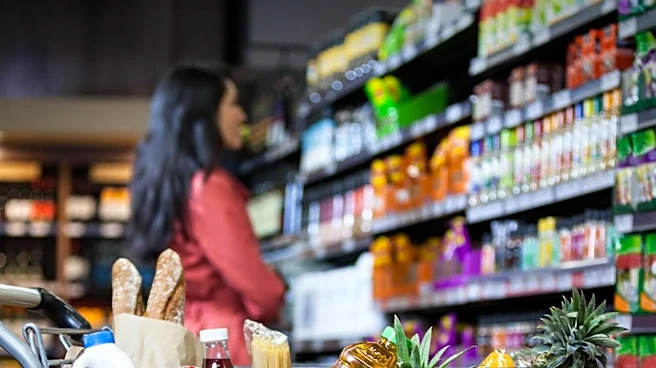
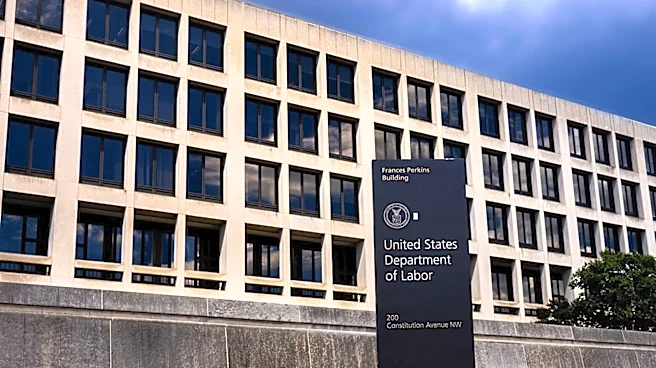
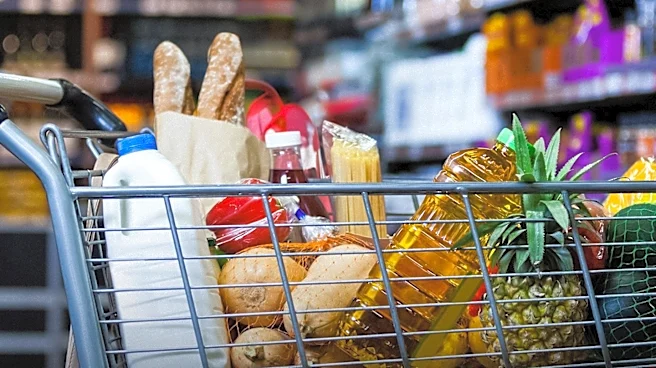
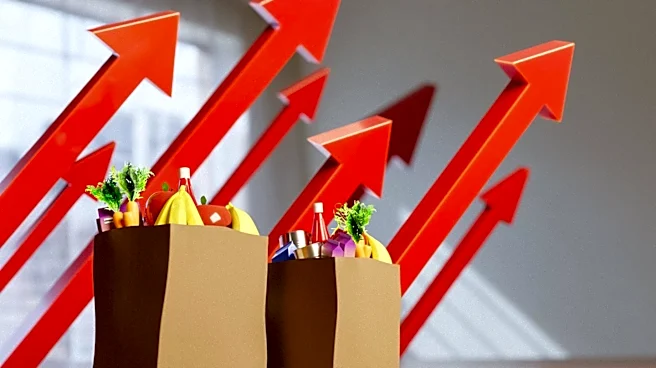
Despite a slowdown in inflation, U.S. grocery prices remain high, a phenomenon described as the 'rockets and feathers' effect. While food price inflation peaked in 2022, prices have not significantly decreased, frustrating consumers. The U.S. Department
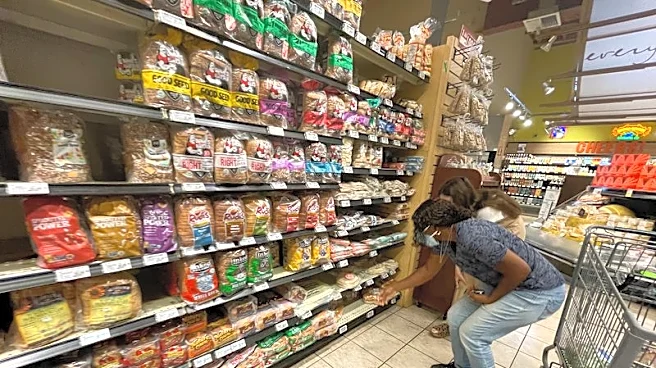
of Agriculture reports that food prices at home are expected to rise by 2.7% this year. Factors such as high gas prices, reduced government food aid, and increased GLP-1 usage are influencing grocery spending. Consumers are increasingly turning to discount retailers and store brands to manage costs, with discounters like Costco and Walmart gaining market share.
Why It's Important?
The persistent high grocery prices are affecting consumer behavior, leading to changes in shopping habits and preferences. This shift could have broader implications for the retail industry, as traditional grocers may lose market share to discount retailers. The economic pressure on households could also impact overall consumer spending, a critical component of economic growth. Understanding these trends is essential for businesses and policymakers to address the challenges posed by inflation and its impact on consumers.
What's Next?
Retailers may continue to adjust pricing strategies to attract cost-conscious consumers. As major retailers invest in price cuts, others in the market may follow suit to remain competitive. Policymakers might explore measures to address the underlying causes of high grocery prices, such as supply chain disruptions or trade policies. Monitoring consumer behavior and market dynamics will be crucial in anticipating future trends in the retail sector.