



What's Happening?
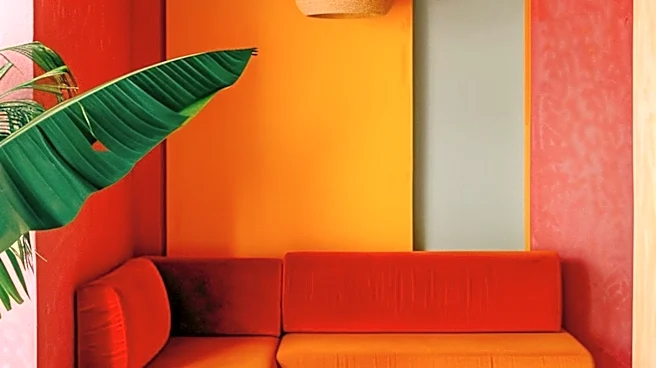
Interior designers are recommending 'color drenching' as an effective technique for decorating small, dark rooms. This method involves using bold, saturated colors, such as rich navy, burgundy, or dark brown, on walls, ceilings, and trim to create an immersive
and cozy atmosphere. According to designers like Bethany Adams and Nadia Watts, this approach can make a small room feel larger and more engaging by enveloping the space in a single, deep hue. Rather than making the room feel confined, the consistent application of a dark color blurs the boundaries, transforming the room's smallness into a distinctive feature. Specific paint colors recommended include Farrow & Ball’s Brinjal, Benjamin Moore’s Gentleman’s Gray, Benjamin Moore’s Mustang, Little Greene's Hicks Blue, and Little Greene's Adventurer.
Why It's Important?
This design trend challenges traditional advice that suggests painting small rooms white or light colors to make them appear larger. By advocating for dark, saturated colors, designers are offering homeowners a new perspective on maximizing the aesthetic potential of smaller spaces. This approach can significantly impact the interior design industry by promoting a more adventurous use of color and encouraging consumers to embrace bolder choices. For individuals, it provides a practical and stylish solution for creating intimate and sophisticated environments in homes with limited square footage. The shift towards color drenching also highlights a broader trend in home decor that prioritizes mood and experience over purely functional considerations of space, potentially influencing paint sales and interior design services.
What's Next?
The increasing popularity of color drenching is likely to lead to more homeowners experimenting with bold color palettes in their smaller rooms. Paint manufacturers may respond by promoting their darker, more saturated shades and offering curated collections specifically for this trend. Interior designers will continue to integrate color drenching into their portfolios, showcasing its transformative power in various residential settings. Educational content, such as design blogs and home improvement shows, will likely feature more tutorials and examples of successful color-drenched spaces, further normalizing this once unconventional approach. This could also inspire related trends in furniture and decor, with pieces designed to complement or stand out against deeply colored backdrops.
Beyond the Headlines
Beyond its immediate aesthetic appeal, color drenching taps into the psychological impact of color on mood and perception. Dark, enveloping colors can evoke feelings of comfort, security, and luxury, transforming a small room from a perceived limitation into a sanctuary. This trend also reflects a growing desire for personalization and unique expression in home environments, moving away from generic, mass-produced aesthetics. Ethically, it encourages a more sustainable approach to design by emphasizing thoughtful color choices that can dramatically alter a space without extensive structural changes. Culturally, it signifies a departure from minimalist trends, embracing richness and depth, and potentially influencing how we view and utilize every corner of our living spaces.