





What's Happening?
Khalifa University of Science and Technology is making significant strides in developing next-generation battery, energy storage, and hydrogen technologies. This research is being driven by artificial intelligence (AI), innovative materials, and international
research partnerships, all aimed at supporting the UAE’s clean energy ambitions. Dr. Ali AlHammadi, Associate Chair, Undergraduate Studies and Associate Professor, Chemical & Petroleum Engineering at KU, detailed the university's work in energy storage, including a post-lithium portfolio that combines laboratory materials work with AI to predict performance and identify promising materials. The university is exploring alternatives to conventional lithium-ion batteries, such as sodium-ion, zinc-ion, solid-state, and photo-rechargeable batteries, which prioritize safety, affordability, and durability. In parallel, Dr. Maryam Khaleel Alhashmi, Associate Professor of Chemical and Petroleum Engineering, discussed advancements in hydrogen production and storage. This includes research into producing hydrogen from industrial waste like hydrogen sulfide (H₂S) and seawater, as well as collaborations with institutions like Tsinghua University in China. Khalifa University's hydrogen research also leverages AI to develop new materials, membranes, catalysts, and storage technologies for hydrogen production, utilization, and storage.
Why It's Important?
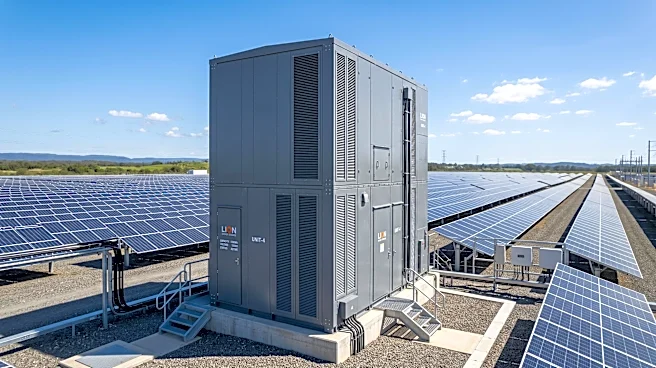
These advancements are crucial for the UAE's transition to a clean energy economy and have broader implications for global energy sustainability. Improved energy storage solutions are essential for integrating renewable energy sources like solar power, ensuring a consistent and reliable energy supply. By developing more affordable and sustainable battery technologies using abundant materials, Khalifa University is addressing key challenges in energy storage accessibility and environmental impact. The focus on hydrogen production from waste and seawater offers innovative pathways to reduce reliance on traditional, energy-intensive methods, potentially lowering costs and increasing the availability of clean hydrogen. This research supports the decarbonization of various sectors, including steelmaking and aviation, through initiatives like optimizing green hydrogen use in direct reduced iron production and developing sustainable aviation fuels. The university's strong industry collaborations are vital for translating laboratory research into practical, scalable solutions, positioning the UAE as a leader in clean energy innovation.
What's Next?
The next phase for many of these technologies involves moving beyond the laboratory stage to larger-scale cells, extended testing, and pilot demonstrations with industry partners. For battery technologies, this means further development to ensure commercial viability and integration into various applications. In hydrogen research, the focus will continue on optimizing production methods, such as those using industrial waste and seawater, and enhancing storage and utilization technologies. Continued international collaborations, like the one with Tsinghua University, will be key to accelerating progress and sharing expertise. The university's engagement with industry partners, including EMSTEEL, Ohmium International, ADNOC, Masdar, ENOC, Emirates, Etihad, Airbus, and Kimwan Hydrogen, will facilitate the practical application and scaling of these innovations. The long-term vision includes creating 'hydrogen oases' by integrating advanced hydrogen technologies with affordable clean energy and industrial hubs, aiming to deliver cost-effective clean energy solutions for the UAE and potentially for global markets.
Beyond the Headlines
The research at Khalifa University reflects a global imperative to diversify energy sources and mitigate climate change. The emphasis on AI and advanced materials highlights the interdisciplinary nature of modern scientific innovation, where computational power and novel substances are critical enablers. The exploration of alternative battery chemistries, moving beyond lithium-ion, addresses concerns about resource scarcity and the environmental impact of current battery production. Similarly, the focus on hydrogen production from non-traditional sources like industrial waste and seawater points to a future where energy generation is more circular and less dependent on finite resources. This holistic approach to clean energy, encompassing both storage and production, has the potential to reshape energy infrastructure, create new industries, and foster a more sustainable global economy. The UAE's investment in this research underscores a strategic pivot towards a post-oil future, leveraging its resources and intellectual capital to become a leader in green technologies.