






What's Happening?
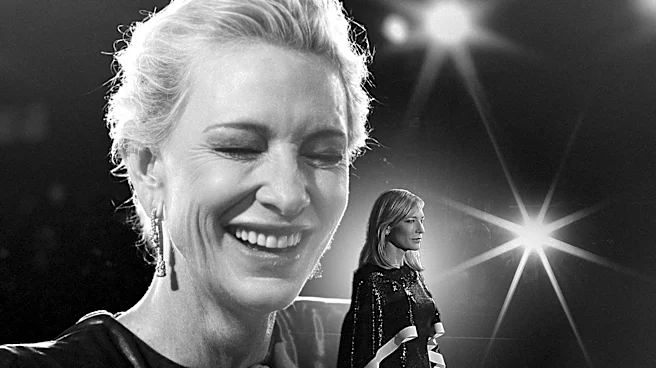
Australian actress Cate Blanchett was awarded the Praemium Imperiale, an international arts award presented by the Japan Art Association, in Tokyo on October 28, 2026. The ceremony, held at the Meiji Memorial Hall, saw Princess Hanako of Hitachi present Blanchett with
a gold medal. The Praemium Imperiale, established in 1988, is often referred to as the 'Nobel Prize of the Arts' and recognizes individuals who have made significant contributions to the development of art in five categories: painting, sculpture, architecture, music, and theater/film. Blanchett also received a prize of 15 million yen. Other recipients this year included contemporary artist Jenny Holzer and architect Daniel Libeskind. During a press conference related to the award, Blanchett discussed her approach to acting, emphasizing the importance of finding meaning in the unspoken and the nuances between words, and the role of doubt in fostering creativity and connection.
Why It's Important?
This international recognition highlights the global impact of Cate Blanchett's artistic contributions and reinforces the significance of cross-cultural appreciation in the arts. For the U.S. entertainment industry, such accolades for its prominent figures can elevate the perceived value and influence of American cinema and theater on the world stage, even for an Australian-born actress who has a significant presence in Hollywood. The award underscores the universal language of art and performance, transcending national boundaries and fostering cultural exchange. It also brings attention to the Praemium Imperiale itself, potentially encouraging more American artists to aspire to this prestigious international honor and promoting a broader understanding of diverse artistic achievements.
Beyond the Headlines
Blanchett's reflections on the role of 'doubt' in creativity offer a deeper insight into the artistic process, suggesting that uncertainty is not a weakness but a catalyst for exploration and connection. This philosophical approach to her craft resonates beyond the entertainment industry, touching upon broader themes of human inquiry and the pursuit of understanding in an uncertain world. Her emphasis on the unspoken in performance also speaks to the power of non-verbal communication and emotional depth in storytelling, which can influence acting methodologies and critical appreciation in film and theater globally. This perspective challenges the conventional view of confidence as a sole driver of success, advocating for a more nuanced understanding of creative development.