



What's Happening?
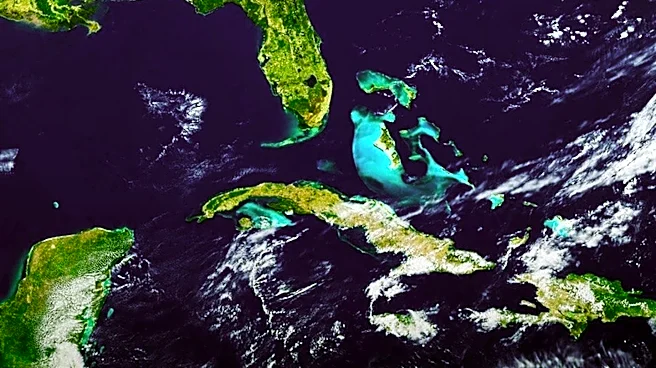
The El Niño climate phenomenon, characterized by warmer-than-average sea surface temperatures in parts of the Pacific Ocean, is expected to suppress the formation of Atlantic hurricanes, potentially leading to a quieter hurricane season in 2026. U.S.
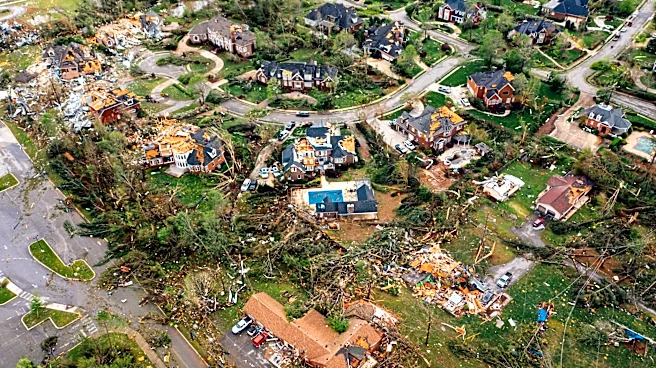
government scientists have predicted a below-average season with eight to 14 named storms and one to three major hurricanes. Historically, this would be favorable news for property insurers, as fewer storms typically result in lower insured losses. However, the situation is complicated by significant population growth and increased property values along U.S. coastlines. Since 1970, coastal counties have seen a population increase of over 40 million people, and property values and reconstruction costs have risen significantly. This expansion means that even a quieter hurricane season could still result in substantial financial losses if storms hit densely populated or high-value areas.
Why It's Important?
The potential for reduced hurricane activity due to El Niño is not as reassuring for insurers as it once was. The dramatic increase in coastal development and property values has altered the risk landscape. Insurers are now more concerned about the location and impact of storms rather than their frequency. This shift in focus is crucial because even a single storm making landfall in a densely populated or high-value area can lead to significant financial losses. As a result, insurers are reevaluating their risk assessment and pricing strategies to better account for these changes. The evolving risk profile underscores the need for more sophisticated models that consider not just the number of storms but also their potential impact on vulnerable coastal regions.
What's Next?
Insurers are likely to continue adjusting their catastrophe risk models to better reflect the current realities of coastal development and property values. This may involve more granular assessments of potential storm impacts and increased premiums for properties in high-risk areas. Additionally, there may be a push for more robust building codes and infrastructure improvements to mitigate potential damages. Policymakers and urban planners might also need to consider strategies for managing coastal growth and ensuring that new developments are resilient to extreme weather events. The insurance industry will be closely monitoring the 2026 hurricane season to refine their models and strategies further.