



What's Happening?
First-time filmmaker Theo Rollason has created a new documentary, 'Queer Edward II,' utilizing 30 hours of previously unseen behind-the-scenes footage from Derek Jarman's 1991 film 'Edward II.' The footage was shot by Seamus McGarvey, then a young cinematographer,
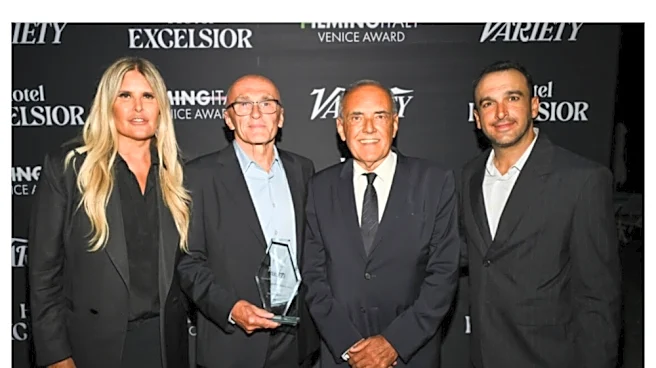
and had been stored in a cupboard for 35 years after production ran out of funds for a planned behind-the-scenes film. Rollason discovered the Betacam SP footage after a tip from a friend and, alongside editor Nicole Hálová, meticulously reviewed it. The resulting documentary, which premiered at the Venice Film Festival and is slated for the London Film Festival, not only offers insight into Jarman's artistic methods but also highlights his significant involvement in the UK's gay rights movement, particularly with the protest group OutRage. Executive producers on the project include Tilda Swinton, Sandy Powell, Christine Vachon, and Russell Tovey.
Why It's Important?
The discovery and release of 'Queer Edward II' is significant for film history and LGBTQ+ studies. It provides an unprecedented look into the creative process of Derek Jarman, a pivotal figure in British cinema and a prominent gay artist. The documentary sheds new light on Jarman's direct activism within the gay rights movement, a facet of his life that, according to Rollason, is often overshadowed by his artistic legacy. This film serves as a valuable historical document, offering a more complete understanding of Jarman's commitment to social change and his role in challenging societal norms through his work and personal advocacy. For audiences, it offers a unique perspective on the intersection of art and activism during a critical period for LGBTQ+ rights in the UK, potentially inspiring contemporary discussions on similar themes.
What's Next?
'Queer Edward II' premiered at the Venice Film Festival and is scheduled to screen at the London Film Festival. Rollason expressed a desire for the documentary to be shown as a companion piece to Jarman's original 'Edward II,' aiming to increase the visibility of Jarman's work, especially in the UK where the 1991 film has not been widely seen in recent years. The film's independent production, initially without funding, highlights the challenges and dedication involved in bringing such a project to fruition. Its reception at these major film festivals will likely influence its broader distribution and potential for educational or retrospective screenings, further solidifying Derek Jarman's legacy and his contributions to both cinema and social justice.
Beyond the Headlines
The narrative surrounding the discovery of the 'lost' footage for 'Queer Edward II' underscores the often-unseen historical archives that exist, holding untold stories and perspectives. This particular find not only enriches the understanding of a significant artist but also emphasizes the importance of preserving behind-the-scenes materials, which can offer invaluable context to finished works and the broader cultural movements they represent. The film's focus on Jarman's activism, beyond his artistic output, prompts a deeper reflection on the role of artists as social and political agents. It highlights how personal convictions can profoundly shape creative endeavors and how art can serve as a powerful tool for advocacy and social commentary, resonating across generations and continuing to inform contemporary discussions on identity, rights, and representation.