



What's Happening?
An appeals court has ruled that a copyright infringement lawsuit concerning the TV show 'The Pitt' and its alleged similarities to 'ER' can proceed to trial. The lawsuit was filed by Sherri Crichton, widow of 'ER' creator Michael Crichton, against Warner
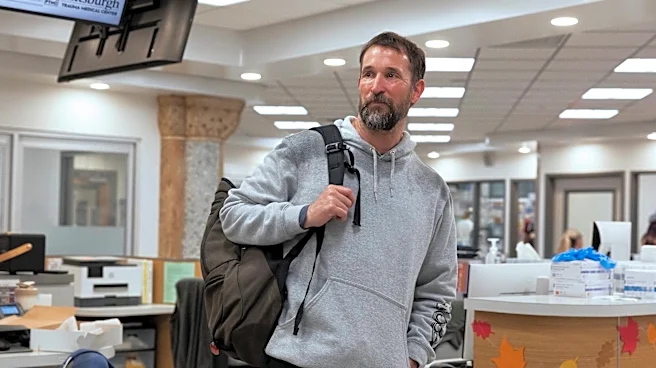
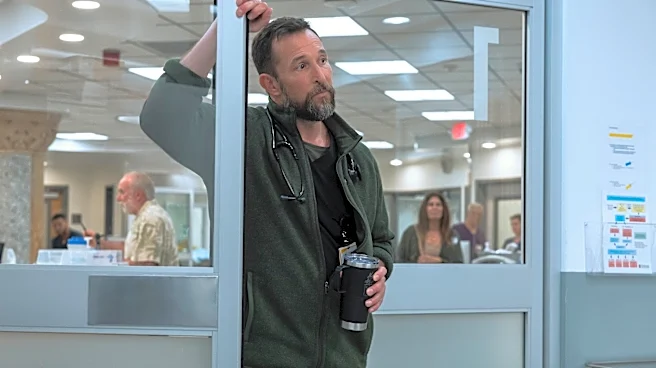
Bros. Television. A three-judge panel unanimously rejected Warner Bros. Television's appeal, which had argued that the two medical dramas were unrelated. The court found 'clear and numerous similarities' between 'The Pitt' and 'ER,' citing shared elements such as emergency room settings, fast-paced storytelling, medical terminology, graphic injury depictions, and the presence of a young, inexperienced doctor. This decision overturns Warner Bros. Television's attempt to dismiss the case under California's anti-SLAPP statute, which protects creative expression. The appellate court, however, dismissed claims against specific creators of 'The Pitt'—Noah Wyle, John Wells, and R. Scott Gemmill—due to a lack of evidence that they knowingly violated Crichton's contractual rights. The dispute will now return to the trial court, where a jury may ultimately determine if 'The Pitt' is a derivative work of 'ER', unless a settlement is reached beforehand.
Why It's Important?
This ruling is significant for intellectual property rights within the entertainment industry, particularly concerning derivative works and contractual agreements. Michael Crichton's original agreement with Warner Bros. included a 'frozen rights' provision, which aimed to prevent spin-offs or reboots of 'ER' without his explicit approval. The court's decision to allow the case to proceed underscores the importance of such contractual clauses and could set a precedent for how studios approach adaptations or new projects that bear resemblance to existing intellectual property. For writers, creators, and their estates, this case highlights the potential for legal recourse when they believe their original works are being infringed upon. A victory for Crichton's estate could strengthen creators' control over their intellectual property, potentially influencing future negotiations and development deals in Hollywood. Conversely, if 'The Pitt' is found not to be a derivative work, it could clarify the boundaries of creative inspiration versus copyright infringement in the medical drama genre.
What's Next?
The dispute will now move back to the trial court, where both parties will engage in discovery, gathering evidence and preparing for a potential jury trial. A jury will ultimately be tasked with deciding whether 'The Pitt' constitutes a derivative work of 'ER.' This process could be lengthy and involve detailed examinations of both shows' scripts, production notes, and creative development. There remains the possibility of a settlement between Sherri Crichton and Warner Bros. Television before a jury delivers a verdict, which would avoid a public trial and potentially costly legal fees. The outcome of this case, whether through settlement or trial, will be closely watched by legal professionals and stakeholders in the entertainment industry, as it could influence how studios and creators navigate intellectual property rights for established franchises and new productions in the future.
Beyond the Headlines
Beyond the immediate legal battle, this case touches upon broader themes of creative ownership and the evolution of storytelling in television. The 'frozen rights' provision in Crichton's original contract reflects a creator's desire to maintain control over their artistic legacy, a common concern in an industry driven by sequels, reboots, and spin-offs. The lawsuit also raises questions about the fine line between inspiration and imitation, particularly in popular genres like medical dramas, which often share common tropes and settings. The court's emphasis on 'clear and numerous similarities' suggests a rigorous standard for determining infringement, which could impact how future projects are developed and vetted for potential copyright issues. This case could encourage studios to be more diligent in securing rights and permissions, and creators to be more assertive in protecting their intellectual property, potentially leading to shifts in industry practices regarding content development and licensing.