






What's Happening?
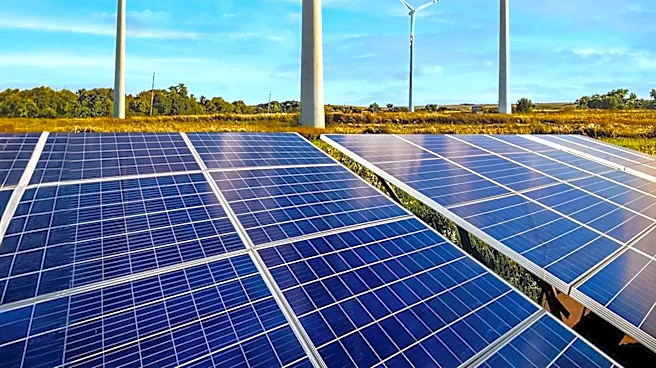
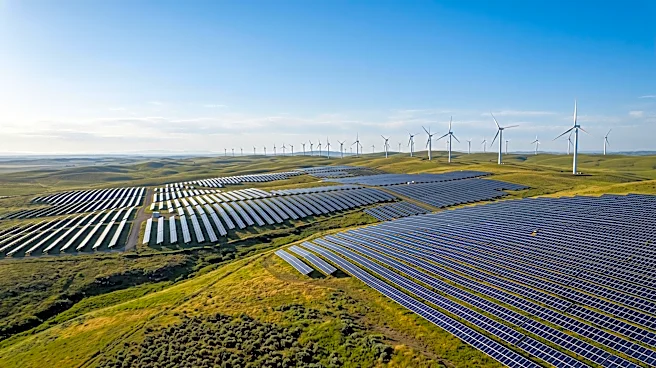
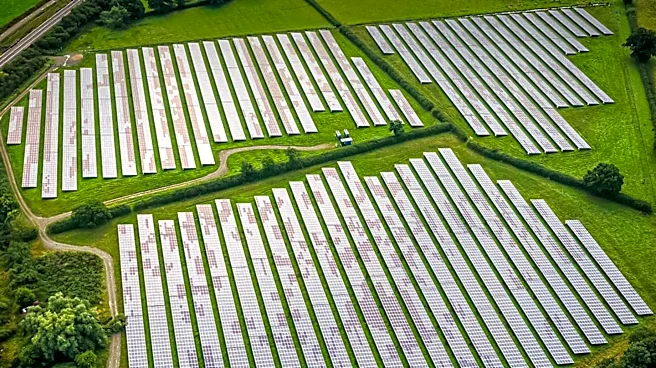
New Haven, Connecticut, has successfully transformed a capped landfill into a revenue-generating solar farm, earning the city $6,000 per month. This project involved installing 1,920 solar panels on the landfill at 260 Middletown Avenue. The unique challenge
of this installation was the inability to drive steel posts into the ground due to the landfill's sealed cap, which protects groundwater from buried waste. To overcome this, the solar arrays are held down by concrete ballast blocks, a method that avoids puncturing the protective liner. Greenskies Clean Energy, a North Haven-based developer, built the array and signed a 20-year lease with the city. The electricity generated, approximately 1.4 million kilowatt-hours annually (enough to power about 200 homes), is sold directly to United Illuminating, the local utility, by Greenskies. The city itself did not incur any construction costs for the project.
Why It's Important?
This initiative by New Haven is significant as it demonstrates a viable model for repurposing otherwise unusable land, such as capped landfills, for renewable energy generation. The project provides a consistent revenue stream for the city, totaling $1.4 million over the 20-year lease, which is directed into the general fund. This financial benefit is achieved without any upfront investment from the city, making it an attractive option for municipalities with similar 'dead land' properties. Furthermore, it contributes to the local energy grid with clean electricity, aligning with broader environmental sustainability goals. The innovative engineering solution of using ballast blocks instead of driven piles addresses a common constraint in landfill solar projects, potentially opening doors for similar developments across the country where thousands of capped dumps currently sit idle.
What's Next?
New Haven plans to expand its solar energy efforts. The city and Greenskies have already installed solar canopies over parking areas at two city schools and have four more sites slated for development by next summer, including East Shore Park, Roberto Clemente Academy, Career High School, and Wilbur Cross High School. The city is also exploring the possibility of adding a second cluster of panels on the landfill itself. This ongoing expansion indicates a commitment to increasing renewable energy capacity and further leveraging underutilized municipal properties. The success of this project may serve as a blueprint for other cities facing similar challenges with capped landfills, potentially leading to a wider adoption of such solar development models across the U.S.
Beyond the Headlines
The New Haven landfill solar project highlights a broader shift in how communities view and utilize marginal land. Historically, capped landfills have been costly liabilities, requiring maintenance without generating income. This project transforms such a liability into an asset, demonstrating a creative approach to urban land management and sustainable development. It also underscores the importance of public-private partnerships in achieving environmental and economic goals. The engineering solution employed, using ballast blocks, could become a standard practice for solar installations on sensitive sites, influencing future regulations and construction methods in the renewable energy sector. This model could also inspire innovative uses for other types of 'dead land,' such as abandoned industrial sites or former mining areas, contributing to a more circular economy and efficient land use nationwide.