
What's Happening?
The WTA Finals have experienced significant changes in its lineup, with two players withdrawing from the tournament. Karolina Muchova withdrew due to illness, having already lost her first two matches and thus unable to advance. Elena Rybakina also withdrew before
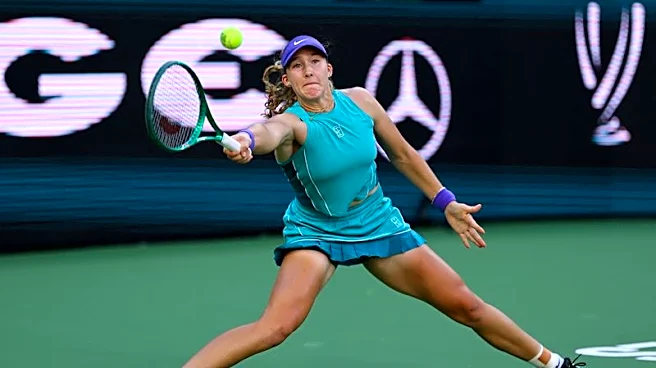
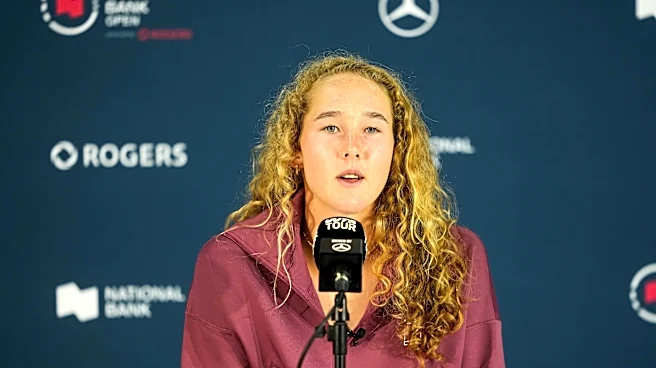
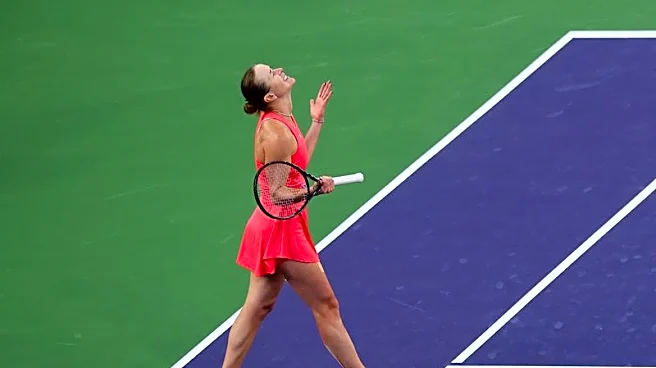
the tournament commenced. These withdrawals led to alternates competing in the round-robin stage, a situation that has not occurred since 2019. In ongoing matches, Mirra Andreeva secured a dominant victory over Diana Shnaider, winning 12 of the final 13 games to finish 6-2, 6-1. Andreeva now holds a 3-0 record in Group 2 and is set to face American Jessica Pegula in the semifinals. The other semifinalist will be determined by the match between Aryna Sabalenka and Elina Svitolina.
Why It's Important?
The high number of withdrawals at a prestigious event like the WTA Finals raises concerns about player welfare and the demanding nature of the professional tennis circuit. The need for alternates to compete in the round-robin stage, a rare occurrence, highlights the physical toll on athletes and the potential for injuries or illnesses to impact major tournaments. For the players who remain, particularly those like Mirra Andreeva who are performing exceptionally, these circumstances present both opportunities and challenges. The shifting lineup can alter competitive dynamics, potentially opening pathways for less-seeded players while also requiring adaptability from all participants. The integrity and excitement of the tournament are also affected, as fans may miss out on seeing top-ranked players compete.
What's Next?
The WTA Finals will proceed with the remaining matches to determine the champions. Mirra Andreeva will face Jessica Pegula in one semifinal, while the other semifinalist will emerge from the match between Aryna Sabalenka and Elina Svitolina. The outcomes of these matches will set the stage for the final, where the season's top female tennis player will be crowned. Beyond the immediate competition, the WTA may need to review its scheduling and player support mechanisms to address the recurring issue of withdrawals, especially at the end of a long season. This could involve discussions on player rest periods, injury prevention, and the overall structure of the tour to ensure the long-term health and participation of its athletes.
Beyond the Headlines
The frequent withdrawals in professional tennis, particularly at high-stakes tournaments, underscore a broader conversation about athlete burnout and the sustainability of demanding sports careers. The physical and mental strain on players, who travel extensively and compete intensely for most of the year, is immense. This situation prompts questions about whether the current tour structure adequately prioritizes player health. It also highlights the depth of talent within the WTA, as alternates are capable of stepping in and performing at a high level, maintaining the competitive spirit of the event. The reliance on alternates, while necessary, also subtly shifts the narrative from a clash of established titans to a platform where emerging talents can seize unexpected opportunities.