
What's Happening?
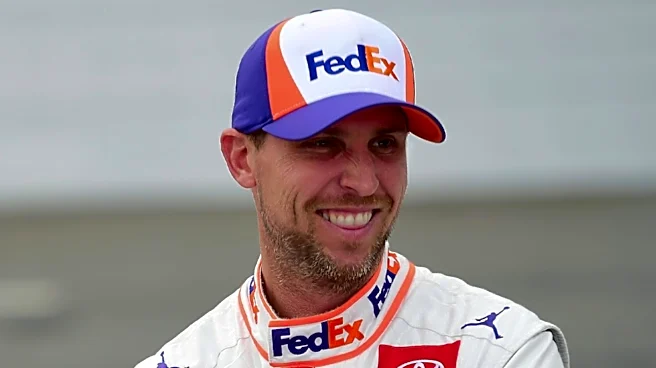
Denny Hamlin has secured the ninth position on the list of NASCAR Cup Series' all-time winningest drivers, with a total of 64 career victories. This achievement places him ahead of notable drivers like
Kyle Busch, who has 63 wins. Hamlin, a long-standing driver for Joe Gibbs Racing, is also recognized for his three Daytona 500 victories and his reputation as one of the most accomplished short-track racers of his generation. Despite his extensive success and numerous wins, Hamlin has not yet won a Cup Series championship, a distinction that sets him apart from many other drivers on the top-10 list who have multiple championships to their name. The list is topped by Richard Petty with 200 wins, followed by David Pearson with 105 wins.
Why It's Important?
Denny Hamlin's position among NASCAR's all-time winningest drivers highlights his significant impact and consistent performance throughout his career. His ability to accumulate 64 wins, including three Daytona 500s, without a Cup Series championship underscores the unique challenges and competitive landscape of NASCAR. This achievement solidifies his legacy as one of the sport's most successful drivers, even as the championship title remains elusive. For Joe Gibbs Racing, Hamlin's consistent victories contribute to the team's prestige and success. His presence on this list also serves as a benchmark for current and future drivers, illustrating the dedication and skill required to achieve such a high number of wins in a demanding sport like NASCAR.
Beyond the Headlines
Denny Hamlin's career, characterized by a high number of wins but no Cup Series championship, sparks a broader discussion about how success is measured in professional sports. While championships are often the ultimate goal, Hamlin's consistent victories and iconic wins like the Daytona 500 demonstrate that a driver can achieve legendary status through sustained excellence and memorable performances. This narrative challenges the conventional wisdom that a championship is the sole determinant of greatness, suggesting that longevity, individual race triumphs, and consistent competitiveness also play a crucial role in shaping a driver's legacy. His career serves as a compelling case study for sports enthusiasts and analysts alike, prompting reflection on the multifaceted nature of achievement in highly competitive fields.