



What's Happening?
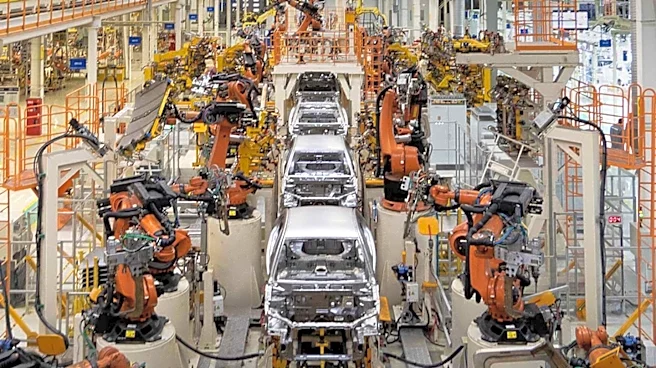
Ford Motor Company has secured a C$464.5 million commitment from the Canadian government to retool its Oakville Assembly Complex in Ontario. This funding package is specifically allocated for converting the plant to support future electric vehicle (EV)
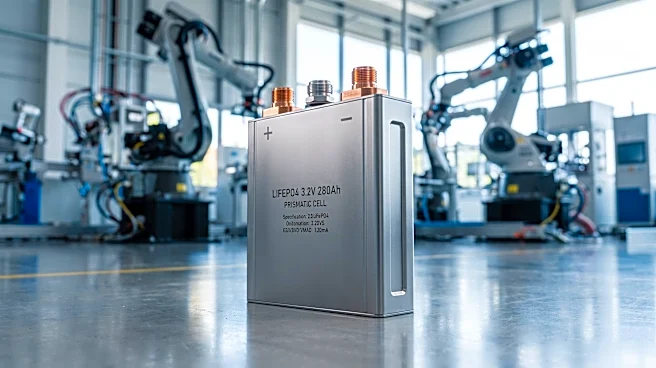
production and related component manufacturing. Concurrently, Ford has initiated the production of electric vehicle battery cells in Michigan, leveraging technology licensed from the Chinese battery manufacturer CATL. These strategic moves are integral to Ford's broader transition towards electric vehicles, aiming to scale its EV offerings and enhance its manufacturing capabilities in North America. The Oakville retooling and the adoption of CATL's battery technology are key components of Ford's Universal EV platform and Ford Energy catalysts, which are designed to support the development of more affordable EV models and expand battery storage capacity.
Why It's Important?
The Canadian funding and Ford's use of CATL battery technology carry significant implications for the U.S. automotive industry and its EV transition. The retooling of the Oakville plant, coupled with Michigan's new LFP battery output, directly supports Ford's goal of producing a sub-$30,000 pickup-based EV and establishing approximately 20 GWh of storage capacity. This could make EVs more accessible to a wider consumer base, potentially accelerating EV adoption in the U.S. However, the reliance on CATL technology introduces policy risks, particularly concerning Chinese battery partnerships, tariffs, and access to U.S. tax credits. The U.S. government's stance on foreign-sourced components for EV tax credits could impact the financial viability of Ford's strategy, affecting both consumers and the company's bottom line. The balance between cost-effective production and geopolitical considerations is a critical factor for the future of EV manufacturing in North America.
What's Next?
The immediate next steps involve monitoring the progress of the Oakville plant's conversion and the integration of the Michigan-produced LFP cells into Ford's EV lineup. A crucial development will be the late 2027 Fathom launch, which will reveal how many Ford vehicles and Ford Energy projects will incorporate these CATL-based LFP cells. Furthermore, U.S. regulators' decisions regarding the eligibility of CATL-based setups for battery tax credits will be paramount. Any new restrictions or confirmations on tax credit access will directly influence Ford's financial incentives and competitive positioning in the EV market. The ongoing dialogue between the automotive industry and government bodies on trade policy and incentive exposure will shape the landscape for EV manufacturing and consumer adoption in the coming years.
Beyond the Headlines
Ford's strategy highlights a complex interplay between global supply chains, national industrial policies, and the push for sustainable transportation. The decision to license technology from CATL, a leading Chinese battery manufacturer, underscores the global nature of EV component sourcing and the challenges of achieving complete domestic independence in critical technologies. This approach could lead to debates about national security, economic competitiveness, and the long-term implications of relying on foreign technology for key industries. It also raises questions about the ethical considerations of international partnerships in a politically charged environment. The success of Ford's EV transition, therefore, hinges not only on technological innovation and market demand but also on navigating intricate geopolitical and regulatory landscapes, potentially setting precedents for other U.S. manufacturers.