

What's Happening?
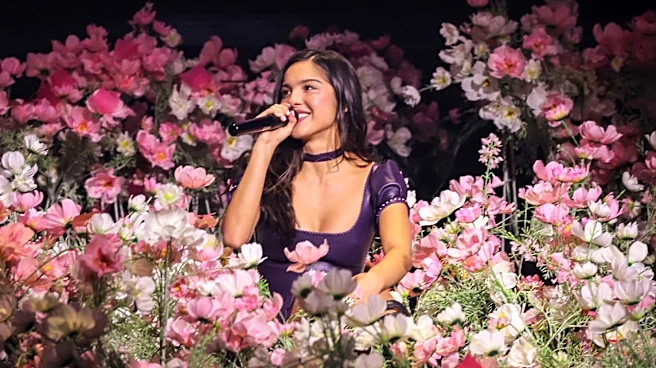
Olivia Rodrigo's new Christmas single, "take me home (4 christmas)," is facing online criticism for its perceived similarity to "Christmas Wrapping" by The Waitresses. This is not the first time Rodrigo has faced such accusations; her debut album "SOUR"
also sparked controversies regarding similarities to other songs like "deja vu" and "good 4 u." Despite the online backlash, Chris Butler, the songwriter of "Christmas Wrapping," has publicly defended Rodrigo. Butler stated on Facebook that Rodrigo contacted him before the song's release to share it and express her admiration for The Waitresses. He praised her work and dismissed the plagiarism claims, viewing her song as an homage rather than a copy. This situation highlights a recurring debate in the music industry about originality versus influence, especially for young artists. The online discourse often involves anonymous individuals accusing artists of unoriginality, even when the original creators do not share the same concerns.
Why It's Important?
This situation is important as it reignites discussions about artistic originality, influence, and the role of online commentary in shaping public perception of artists. For Olivia Rodrigo, a prominent young pop star, repeated accusations of plagiarism can impact her artistic credibility and public image, even when the original creators defend her. It also brings to light the power dynamics in the music industry, where established artists like Chris Butler can influence the narrative around emerging talents. The debate also touches upon the creative process itself, questioning where inspiration ends and copying begins. This can affect how artists approach songwriting, potentially leading to increased caution or self-censorship to avoid similar controversies. Furthermore, it underscores the significant influence of social media platforms in amplifying such debates, often without the full context or direct input from those involved.
What's Next?
In the immediate future, it is likely that discussions surrounding Olivia Rodrigo's originality and the nature of musical influence will continue, particularly on social media platforms. While Chris Butler's defense may mitigate some of the criticism, it may not entirely quell the debate among online commentators. Rodrigo and her team may choose to address these ongoing discussions directly, or they may opt to let the music speak for itself, as Butler has done. This incident could also prompt other artists and industry figures to weigh in on the topic of musical homage versus plagiarism, potentially leading to broader conversations about intellectual property in music. Future releases from Rodrigo will likely be scrutinized even more closely for any perceived similarities to other works, placing additional pressure on her creative process and public relations strategy.
Beyond the Headlines
Beyond the immediate controversy, this event highlights deeper implications regarding the evolution of music and artistic creation in the digital age. The constant accessibility of music from all eras means that contemporary artists are exposed to a vast library of influences, making it increasingly challenging to create something entirely novel. This raises questions about whether the concept of 'originality' itself needs to be re-evaluated in a highly interconnected cultural landscape. Furthermore, the role of producers, such as Dan Nigro in Rodrigo's case, often goes unexamined in these debates, despite their significant influence on a song's sound. The tendency for online communities to appoint themselves as arbiters of artistic integrity, sometimes overriding the opinions of the original creators, also points to a shift in cultural authority. This phenomenon can create a challenging environment for young artists, who may face disproportionate scrutiny and pressure from a vocal online audience.