





What's Happening?
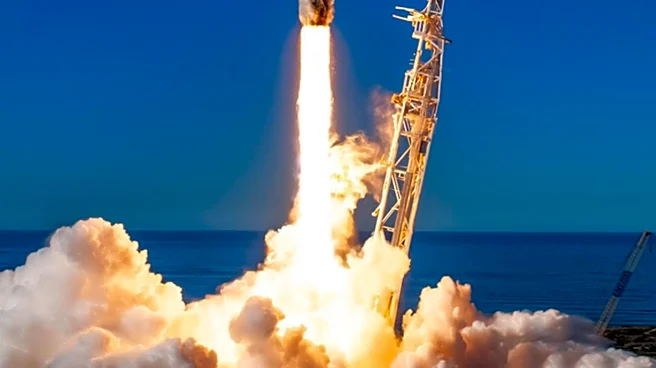
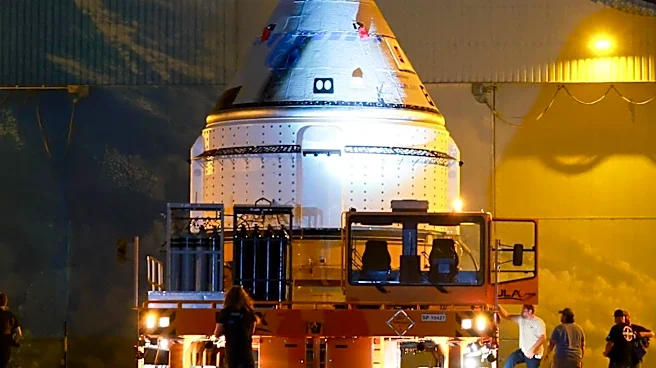
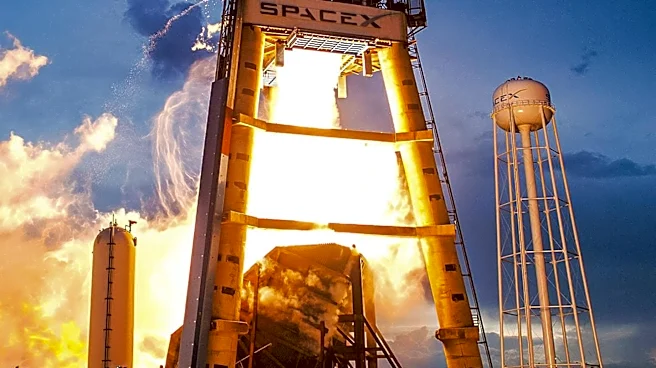
SpaceX has conducted a successful static-fire test of all six Raptor engines on its Starship spacecraft, Ship 40, at the company's Starbase facility in Texas. This test is a critical step in preparing for the 13th test flight of a fully stacked Starship,
expected to occur within the next month. The test involved firing the engines to simulate flight conditions, marking a significant milestone in the development of SpaceX's super-heavy lift rocket, which is designed for seamless landing and reuse.
Why It's Important?
The successful engine test is a crucial advancement in SpaceX's efforts to develop the Starship rocket, which is intended to revolutionize space travel by enabling reusable, cost-effective missions. The Starship's capabilities are central to SpaceX's plans for expanding its Starlink satellite network and supporting NASA's Artemis program, which aims to land astronauts on the moon. The development of such a powerful rocket could significantly impact the space industry, enhancing the ability to deliver heavier payloads to orbit and facilitating more ambitious space exploration missions.
What's Next?
Following the successful engine test, SpaceX will proceed with additional preparations for the 13th Starship test flight, including engine tests for the Super Heavy booster. If these tests are successful, the flight could take place as early as August. The outcome of this test flight will be closely watched by industry stakeholders, as it will provide valuable insights into the performance and reliability of the Starship design. Successful flights could accelerate SpaceX's timeline for deploying the Starship in commercial and exploratory missions.