






What's Happening?
U.S. companies have signed approximately $60 billion in agreements with the Iraqi government, focusing on creating alternative routes for shipping oil out of the Persian Gulf. These deals, signed at the U.S. Chamber of Commerce, also encompass sectors
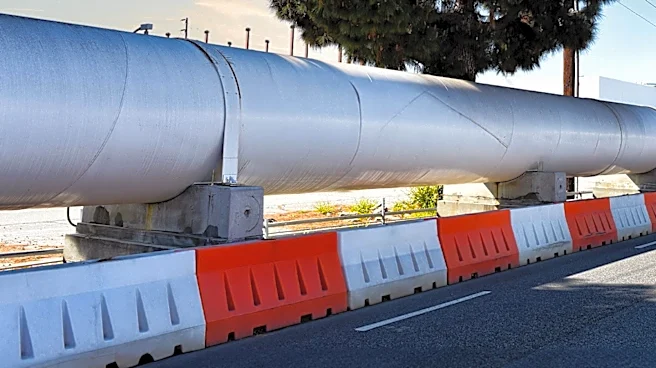
such as healthcare, communications, and infrastructure. The agreements aim to develop new pipelines that could bypass the Strait of Hormuz, a critical chokepoint through which about 20% of the world's oil flows. The timeline for these pipelines to become operational is uncertain, as construction in a single country typically takes over two years, and these projects will span multiple nations. The backdrop of these agreements is the ongoing U.S.-Iran conflict, which has led to fluctuations in oil prices. The price of West Texas crude has risen significantly since the conflict began, reflecting the market's sensitivity to geopolitical tensions.
Why It's Important?
The agreements between U.S. firms and Iraq are significant for several reasons. Firstly, they represent a strategic move to secure alternative oil shipping routes, reducing dependency on the Strait of Hormuz, which has been a focal point of geopolitical tensions. This could enhance energy security and stabilize oil prices by mitigating risks associated with potential disruptions in the Strait. Additionally, the involvement of U.S. companies in Iraq's infrastructure and energy sectors could strengthen economic ties between the two nations, fostering long-term partnerships. The deals also highlight the U.S.'s commitment to supporting Iraq's economic development, which could have broader implications for regional stability and economic growth.
What's Next?
The next steps involve the detailed planning and execution of the pipeline projects, which will require coordination across multiple countries. The U.S. and Iraq will likely engage in further negotiations to address logistical and financial challenges. The involvement of a U.S.-led international consortium suggests that there will be significant international collaboration in executing these projects. Additionally, the agreements may prompt reactions from other regional players, particularly Iran, which has historically sought to influence the Strait of Hormuz. The progress of these projects will be closely monitored by global energy markets, as their success could impact oil supply dynamics and prices.