


What's Happening?
Taffeta is experiencing a significant resurgence on fashion runways, with designers such as Harris Reed, Christian Cowan, and Richard Quinn re-embracing its traditional and theatrical qualities. This comeback is evident in recent collections, where monumental
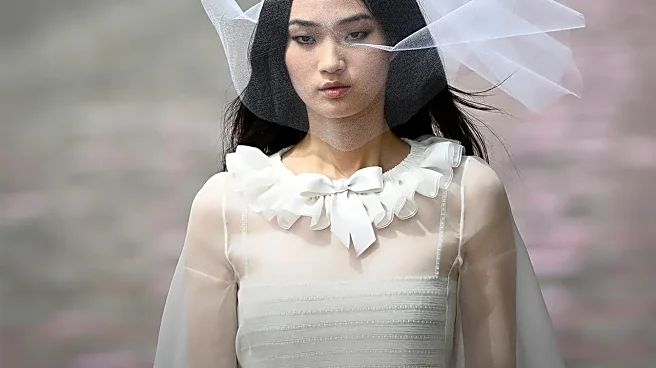
creations featuring bows and regal references are being showcased. Olivier Theyskens also opened his brand Boloria's debut show with gothic, dramatic taffeta looks, while Sean McGirr created a pompous pastel-hued gown for McQueen. The fabric, historically known for its stiff, compact, and structured feel, is being used to create architectural volumes and dramatic silhouettes, reflecting a reinterpretation of maximalist fashion history, including Victorian, Romantic, and 1980s aesthetics.
Why It's Important?
The prominent return of taffeta to high fashion runways, championed by designers like Harris Reed, signals a broader trend in the industry towards embracing dramatic, structured, and historically-inspired aesthetics. This shift can influence consumer preferences and retail trends, potentially leading to an increased demand for garments with volume and intricate detailing. For textile manufacturers, it highlights the continued relevance of traditional fabrics, even as modern interpretations and sustainable alternatives gain traction. The use of taffeta, which can range from luxurious silk to petroleum-derived industrial versions, also raises questions about material sourcing and transparency in the fashion supply chain, impacting both ethical considerations and pricing strategies for brands.
What's Next?
The continued presence of taffeta in collections by designers like Harris Reed suggests that this trend is more than a fleeting moment. We can anticipate further exploration of taffeta's versatility, with designers experimenting with different weights, finishes, and applications, potentially moving beyond occasionwear into more everyday, yet still dramatic, pieces. The discussion around the material's composition—whether silk or synthetic—is likely to intensify, pushing brands to be more transparent about their fabric choices and potentially driving innovation in sustainable taffeta alternatives. This trend could also inspire a broader revival of other structured and voluminous fabrics, influencing the overall silhouette and aesthetic direction of upcoming fashion seasons.
Beyond the Headlines
The resurgence of taffeta, particularly its theatrical dimension as highlighted by designers like Harris Reed, touches upon the deeper psychological and cultural aspects of fashion. Taffeta, with its distinctive rustle and ability to hold dramatic shapes, has historically been associated with grandeur, ceremony, and performance. Its return suggests a collective yearning for escapism, fantasy, and a departure from minimalist trends. In an increasingly digital and often casual world, the deliberate choice of a fabric that demands attention and creates a physical presence can be seen as a form of sartorial rebellion, allowing individuals to engage with clothing as a form of art and self-expression that transcends mere utility. This also reflects a cyclical nature of fashion, where historical elements are reinterpreted to resonate with contemporary desires for impact and individuality.