




What's Happening?
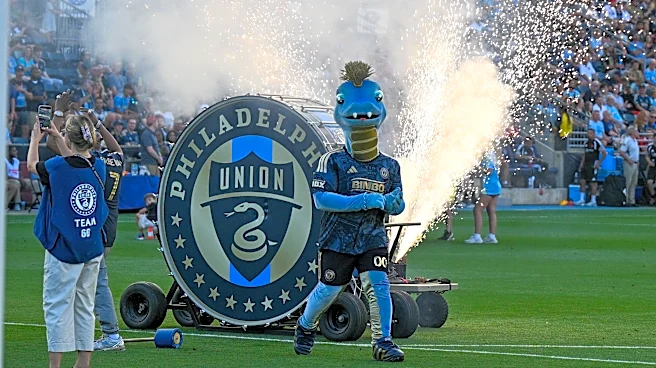
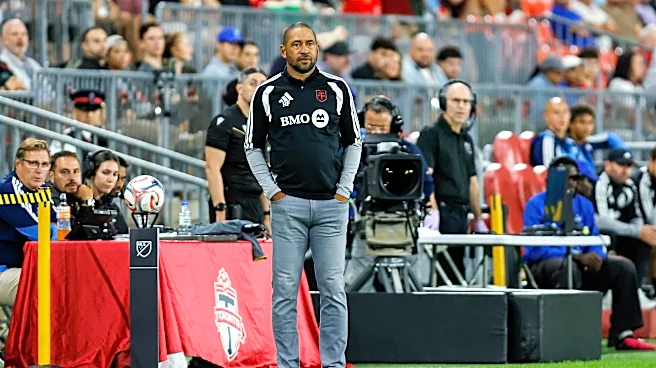
Toronto FC General Manager Jason Hernandez has voiced his disappointment and frustration following the club's sixth consecutive season without a playoff berth in Major League Soccer. The team concluded its season with a 4-1 loss in Philadelphia, finishing
12th in the Eastern Conference standings with a record of 9-13-12. Hernandez acknowledged that the team made only 'marginal strides' this year, falling short of their objectives. In response to the team's performance, Hernandez has already initiated significant changes, including the firing of head coach Robin Fraser and three of his assistants. The search for a new head coach is currently underway, with the team scheduled to open its 2027 sprint season on February 20 at Atlanta United. The last time Toronto FC made a post-season appearance was in November 2020, where they suffered a first-round loss to Nashville SC.
Why It's Important?
The consistent failure of Toronto FC to reach the playoffs for six consecutive seasons highlights significant challenges within the club's management and on-field performance. For U.S. soccer, particularly Major League Soccer (MLS), the performance of a prominent team like Toronto FC can influence league competitiveness and fan engagement across North America. The decision to overhaul the coaching staff indicates a strong commitment to improving results, which could lead to a more competitive Eastern Conference in future seasons. This situation also impacts the financial stakeholders, including team owners and sponsors, who invest in the club with expectations of success and increased visibility. The ongoing search for a new head coach will be closely watched, as the appointment could signal a new strategic direction for the team, potentially attracting new talent and altering the competitive landscape of the league.
What's Next?
The immediate next step for Toronto FC is the critical search for a new head coach to replace Robin Fraser. This decision will be pivotal in shaping the team's strategy, player development, and overall performance for the upcoming 2027 sprint season, which begins on February 20 at Atlanta United. The new coaching staff will face the challenge of rebuilding team morale and implementing effective tactics to break the six-year playoff drought. Fans and stakeholders will be keenly observing the new leadership's ability to attract and retain talent, as well as their approach to improving the team's on-field control and ability to secure full points in games. The success of this coaching transition will largely determine Toronto FC's trajectory in the highly competitive MLS.
Beyond the Headlines
The prolonged period of underperformance by Toronto FC, despite significant investments, raises broader questions about team management, player recruitment strategies, and the long-term sustainability of fan engagement in professional sports when success is elusive. The repeated failure to make the playoffs could lead to a decline in season ticket sales, merchandise revenue, and overall fan enthusiasm, impacting the club's financial health and brand value. This situation also underscores the intense pressure on general managers and coaching staff in professional sports to deliver results, often leading to high turnover rates. The club's struggle to 'take control of games to get full points,' as noted by midfielder Jonathan Osorio, suggests deeper systemic issues beyond just coaching, potentially involving player mentality or tactical execution. Addressing these underlying issues will be crucial for Toronto FC to regain its competitive edge and reconnect with its fanbase.