





What's Happening?
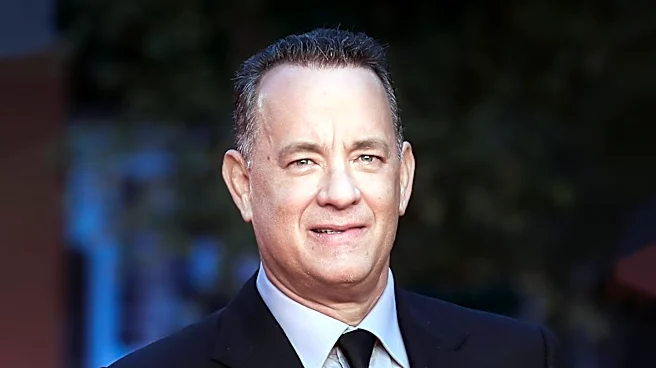
During the production of the critically acclaimed film 'Forrest Gump,' actor Tom Hanks personally financed a significant scene involving a marathon across the United States. This decision came after Paramount Pictures refused to fund the sequence, deeming
its cost too high. In exchange for his financial contribution, Hanks negotiated a larger share of the film's profits. This move proved to be highly beneficial, as 'Forrest Gump' achieved colossal success, earning approximately $680 million worldwide and securing six Academy Awards. The film's director, Robert Zemeckis, and Hanks initially harbored doubts about the movie's potential to resonate with audiences, particularly concerning its 2-hour and 20-minute narrative about an ordinary man recounting extraordinary life events from a park bench. Zemeckis even considered removing the iconic bench scenes to prevent audience boredom, a notion now unimaginable given their central role in the film's enduring legacy.
Why It's Important?
Tom Hanks's personal investment in 'Forrest Gump' highlights a unique intersection of artistic commitment and financial risk in the film industry. His willingness to use personal funds to ensure the completion of a pivotal scene underscores the creative vision that sometimes transcends studio budget constraints. This decision ultimately paid off handsomely, not only for Hanks, who earned his second consecutive Best Actor Oscar for the role, but also for the film's legacy, solidifying its status as a cinematic classic. The success of 'Forrest Gump' demonstrates how an actor's belief in a project can lead to significant financial and critical rewards, potentially influencing future negotiations between talent and studios regarding profit-sharing and creative control. It also serves as a case study in how perceived financial risks by studios can sometimes overlook the immense cultural and commercial potential of a film.
What's Next?
The story of Tom Hanks's investment in 'Forrest Gump' continues to be a notable anecdote in Hollywood, often cited when discussing actor compensation and creative financing models. While direct future actions stemming from this specific historical event are unlikely, its impact resonates in ongoing discussions about film budgeting, profit participation, and the balance of power between studios and major talent. The film's continued popularity, including its availability on streaming platforms like Paramount+, ensures that its production history, including Hanks's crucial financial contribution, remains relevant. This historical example may subtly influence how actors with significant star power approach projects, potentially encouraging similar personal investments in exchange for greater backend participation, especially for films with uncertain initial commercial prospects but strong artistic merit.
Beyond the Headlines
This incident delves into the deeper dynamics of creative control and financial leverage within the film industry. It illustrates that even for established actors like Tom Hanks, bringing a creative vision to fruition can require personal financial commitment when traditional studio funding falls short. The initial skepticism from Paramount Pictures regarding the marathon scene, and the director's concerns about audience engagement, reveal the inherent risks and subjective nature of predicting a film's success. Hanks's gamble not only secured a memorable sequence but also fundamentally altered his financial stake in the film, leading to a much larger payout than a standard acting fee. This scenario underscores the potential for artists to become more direct stakeholders in their work, blurring the lines between creative talent and executive producer, and potentially setting a precedent for how high-profile actors negotiate their involvement in projects they deeply believe in.