



What's Happening?
Experts in food safety and nutrition are advising consumers to streamline their food storage containers, recommending the retention of three specific types. Glass containers are favored due to concerns about plastic particles migrating into food. Glass is seen
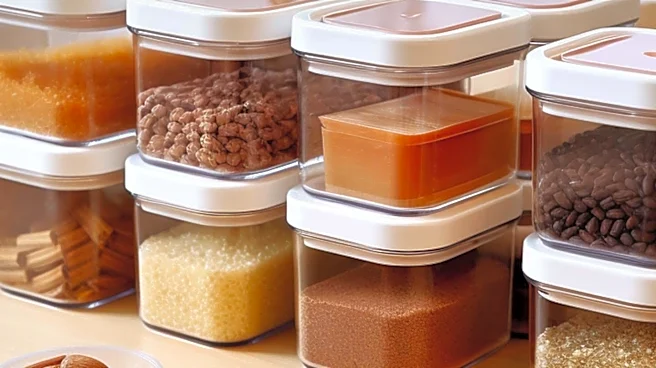
as more durable and less prone to staining and odor retention compared to plastic. Shallow containers are recommended for storing leftovers to ensure quick cooling and prevent bacterial growth. Containers with airtight lids are also advised to limit food exposure to air, which can help maintain freshness and prevent contamination. The guidance aims to improve food safety and storage efficiency in households.
Why It's Important?
The advice on food storage containers is significant as it addresses growing concerns about food safety and the potential health risks associated with plastic use. By promoting glass containers, the guidance aligns with consumer trends towards safer, more sustainable kitchen practices. This shift could impact the market for food storage products, encouraging manufacturers to innovate and produce more glass and other non-plastic options. Additionally, the emphasis on proper food storage techniques can help reduce foodborne illnesses, benefiting public health and potentially reducing healthcare costs associated with food-related illnesses.