
What's Happening?
Walmart has decreased its 'rollbacks,' the company's term for price reductions, as the holiday shopping season approaches. This move follows a period in the summer when Walmart significantly increased
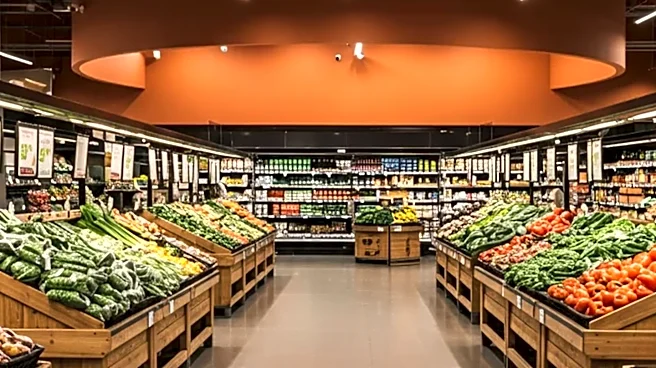
discounts, reaching over 11,000 rollbacks in Walmart U.S. and investing in price reductions at Sam's Club, particularly for fresh food. According to CEO John Furner, these earlier price investments were successful, contributing to food share gains not seen in approximately three years. However, the number of rollbacks has since been reduced to about 7,700 by the end of the third quarter. While this figure is lower than the summer peak, Furner noted it remains higher than the historical average, which typically ranges from 5,000 to 5,500 rollbacks per quarter. The company also highlighted its holiday meal basket, a 26-item selection priced at just over $3.50 per person, with comparable item prices down about 12% from the previous year.
Why It's Important?
This strategic reduction in rollbacks by Walmart carries significant implications for consumers and the broader retail landscape, especially during a period when shoppers are actively seeking deals. Circana Chief Retail Advisor Marshal Cohen emphasized that consumers are particularly keen on finding good deals this year, potentially even more so than last year. GlobalData Managing Director Neil Saunders pointed out that Black Friday traditionally relies on impulse buying driven by visible deals. While discounts will still be present, Saunders suggested they might be applied to higher original price points. RTM Nexus CEO Dominick Miserandino, however, believes that Walmart's established reputation for affordability might mean the number of rollbacks is less critical for attracting shoppers. The decision to scale back discounts could impact consumer spending habits and potentially shift market share among retailers vying for holiday shoppers' dollars, particularly if competitors maintain more aggressive pricing strategies.
What's Next?
The retail sector will closely monitor consumer response to Walmart's adjusted pricing strategy throughout the holiday season. The effectiveness of Walmart's approach, which balances a reduction in the sheer number of rollbacks with a maintained 'historically high' level of discounts and specific price investments like the holiday meal basket, will be a key indicator. Other retailers are likely to observe whether Walmart's established reputation for low prices can sustain sales despite fewer explicit 'rollback' promotions. The coming weeks will reveal if consumers, who are reportedly seeking significant deals, will perceive Walmart's offerings as competitive enough. This period will also provide insights into whether the company's strategy will lead to continued food share gains or if it will prompt shoppers to seek more heavily discounted items elsewhere, potentially influencing future pricing decisions across the industry.
Beyond the Headlines
Walmart's decision to reduce its 'rollbacks' while still claiming a 'historically high' number of discounts reflects a nuanced approach to pricing in a challenging economic environment. This strategy could indicate a shift in how major retailers manage consumer expectations around promotions. Instead of relying solely on a high volume of explicit price cuts, Walmart might be leveraging its brand perception of value and focusing on strategic, targeted price investments, such as the holiday meal basket. This could also be a test of consumer loyalty and the power of a long-standing reputation for affordability. If successful, it might signal a broader trend where retailers move away from constant, deep discounting towards more selective promotional activities, potentially leading to a recalibration of consumer expectations regarding 'deals' during peak shopping seasons. The ethical dimension lies in whether consumers feel they are genuinely receiving the best value, or if the perception of value is being managed through strategic communication rather than across-the-board price reductions.