
What's Happening?
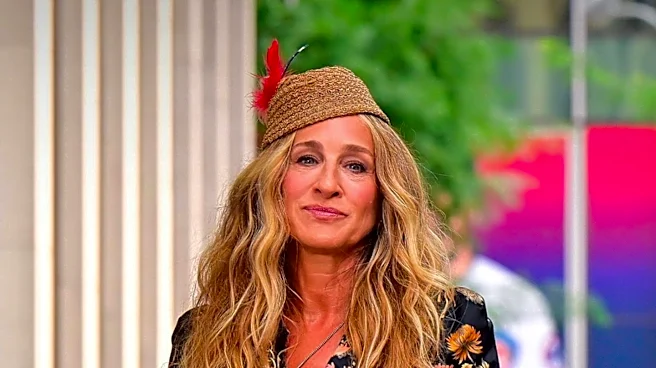
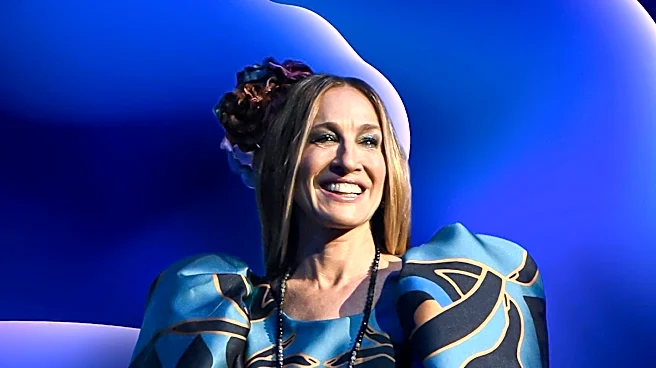
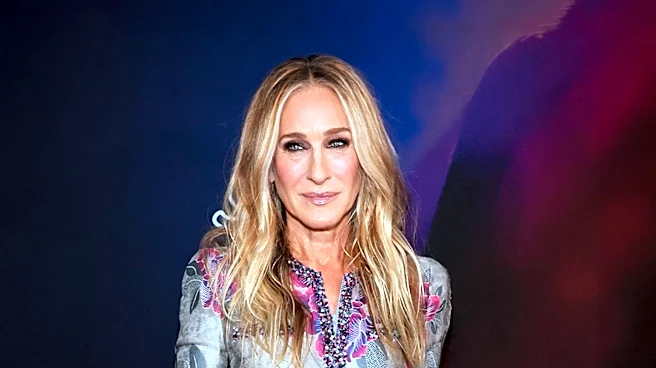
Sarah Jessica Parker, the actress known for 'And Just Like That...', has seemingly expressed disapproval of media personality Megyn Kelly by 'liking' an Instagram video that parodies Kelly's morning routine.
The video, created by Nicole Whitted, mocks Kelly's daily habits and includes audio clips of controversial statements made by Kelly regarding immigration and a past legal case. Parker's social media activity has drawn attention because she has previously stated her reluctance to engage in political discussions on social media, citing a desire to avoid complex topics she doesn't feel fully educated on. Despite her past stance, her 'like' on the critical video suggests a subtle, yet public, alignment with the sentiment expressed in the parody.
Why It's Important?
This incident highlights the evolving nature of celebrity engagement with political and social commentary, even through seemingly minor actions like a social media 'like.' Sarah Jessica Parker's previous statements about avoiding political discourse on social media underscore the pressure public figures face to take stances, as well as the careful navigation required to maintain a public image. Her 'like' on a video critical of Megyn Kelly, a figure often associated with conservative viewpoints, could be interpreted as a subtle political statement, potentially influencing public opinion among her followers. This event also demonstrates how social media platforms can amplify individual actions, turning a simple 'like' into a newsworthy event with broader implications for public discourse and celebrity influence.
What's Next?
It remains to be seen if Sarah Jessica Parker will publicly address her social media activity or if Megyn Kelly will respond to the implied criticism. Parker's past comments suggest she might choose to remain silent on the matter, adhering to her preference for avoiding direct political engagement on social media. However, the incident could spark further discussion among her fanbase and the wider public about the role of celebrities in political commentary and the impact of their online actions. This event may also prompt other public figures to reconsider the implications of their social media interactions, particularly when it comes to controversial personalities or topics. The incident could also fuel further parodies or critiques of public figures on social media, demonstrating the power of online content to shape narratives.
Beyond the Headlines
This seemingly minor social media interaction delves into deeper questions about authenticity, public persona, and the blurred lines between personal and political expression in the digital age. Sarah Jessica Parker's previous articulation of her social media philosophy—to avoid complex political topics she doesn't feel educated on—contrasts with her recent 'like,' which, while not a direct statement, conveys a clear sentiment. This raises questions about the consistency of public figures' stated intentions versus their actions, and how audiences interpret these discrepancies. Furthermore, the incident highlights the power of satire and parody as tools for social commentary, particularly when amplified by celebrity engagement. It also underscores the ongoing cultural and political polarization in the U.S., where even indirect endorsements can be seen as significant statements in the broader ideological landscape.