


What's Happening?
Bronté Terrell, a group fitness presenter for Les Mills, has unveiled a dance-inspired plank challenge designed to invigorate core workouts. This routine, shared on her Instagram, aims to make traditional planks more engaging and effective by incorporating
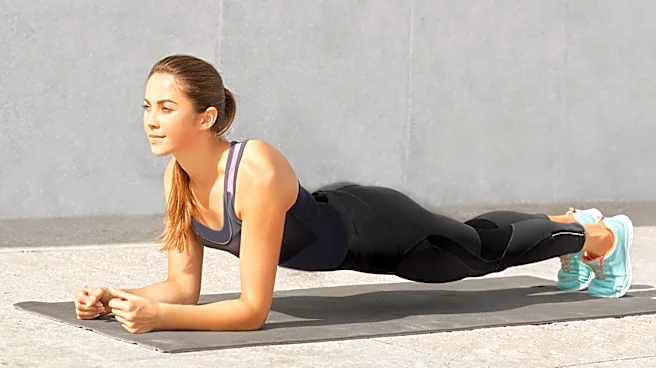
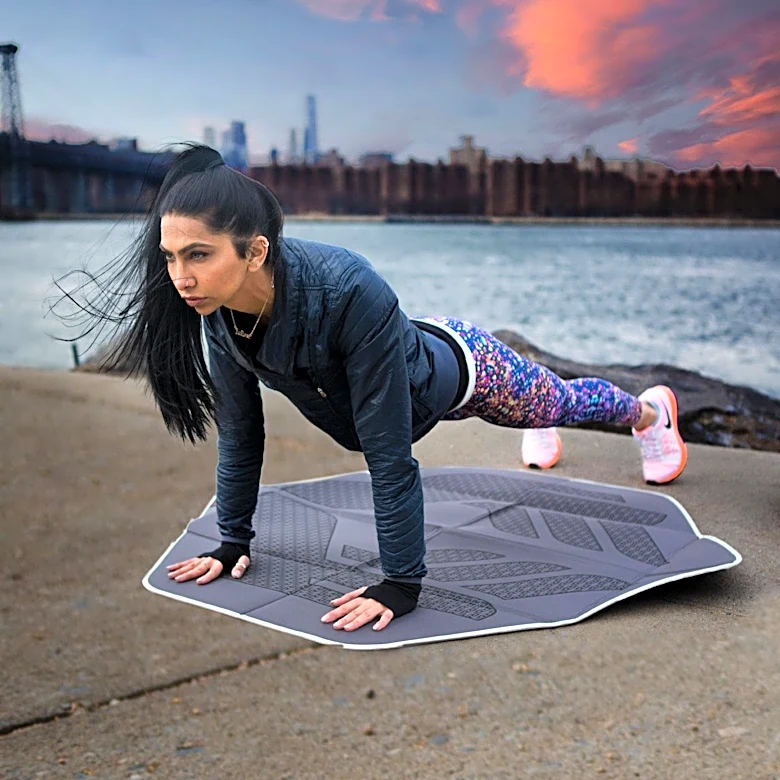
dynamic movements. The challenge involves mastering five core moves: a straight arm plank, bringing the knee to the elbow, rotating into a side plank, transitioning to a reverse plank, and finally, lifting one leg into a single-leg reverse plank. Each move is to be held for 5-10 seconds, with the ultimate goal of performing all five consecutively for 10 seconds each. Terrell emphasizes that the routine can be adapted for various fitness levels, suggesting modifications such as starting on the knees for those unable to hold a plank on their toes. She also highlights the cognitive benefits of such choreographed routines, noting their importance for brain health as individuals age.
Why It's Important?
This innovative approach to core training is significant for the fitness industry and individuals seeking more dynamic workout options. Traditional planks, while effective, can often be monotonous, leading to decreased adherence to fitness routines. Terrell's dance-inspired challenge introduces an element of choreography and fluidity, potentially increasing user engagement and motivation. By making core workouts more enjoyable and mentally stimulating, it could help a broader demographic maintain consistent exercise habits. The emphasis on adaptability also makes this routine accessible to beginners and those with varying physical capabilities, promoting inclusivity in fitness. Furthermore, the focus on challenging neural pathways underscores the growing recognition of the link between physical activity and cognitive health, offering a holistic benefit beyond just physical strength.
What's Next?
Fitness enthusiasts and trainers are likely to integrate this dance-inspired plank challenge into their routines, either as a standalone core workout or as part of a broader fitness regimen. The adaptability of the challenge means it can be scaled for different fitness levels, potentially leading to its adoption in various group fitness classes and personal training programs. Social media platforms, where Terrell initially shared the routine, will likely see an increase in users attempting and sharing their progress with the challenge, fostering a community around this new workout style. As more individuals experience the benefits of this dynamic approach, it could influence the development of future core training methodologies, encouraging more creative and engaging exercises in the fitness landscape.
Beyond the Headlines
Beyond its immediate fitness benefits, this dance-inspired plank challenge touches upon deeper implications regarding the evolution of exercise and well-being. The integration of dance and choreographed movements into strength training highlights a shift towards more holistic and enjoyable fitness experiences, moving away from purely utilitarian exercise. This trend reflects a broader cultural desire for activities that not only improve physical health but also offer mental stimulation and a sense of accomplishment. The emphasis on brain health, as mentioned by Terrell, also points to a growing understanding of exercise as a tool for cognitive longevity, challenging the traditional view of fitness as solely physical. This approach could inspire further innovations in exercise, blending different disciplines to create more comprehensive and engaging wellness practices.