




What's Happening?
Sports commentator Skip Bayless has offered a mixed review of David O. Russell's new film 'Madden,' now streaming on Prime Video. While Bayless's wife, Ernestine, reportedly enjoyed the movie, Bayless himself expressed significant disappointment with
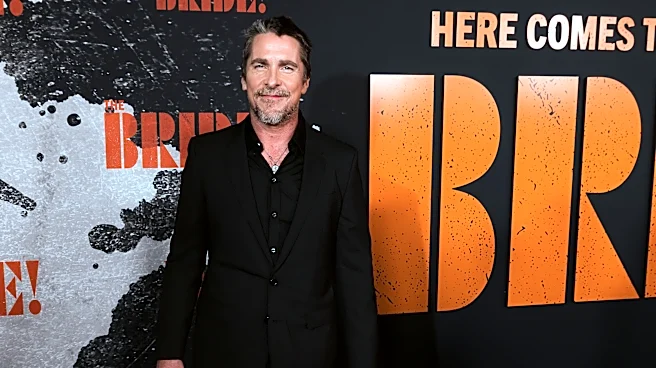
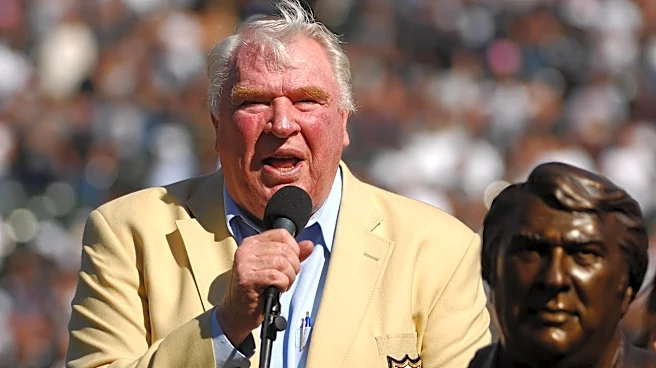
Nicolas Cage's portrayal of legendary NFL coach and broadcaster John Madden. Bayless, who personally knew both Madden and former Oakland Raiders owner Al Davis, stated that Cage 'swung and missed' in capturing Madden's true personality, mannerisms, and intensity as a football coach. He argued that Cage played himself rather than embodying Madden. Conversely, Bayless lauded Christian Bale's performance as Al Davis, calling it 'perfection.' He noted that Bale accurately captured Davis's appearance, cadence, accent, and even his facial expressions, suggesting Bale deserves an Academy Award nomination for Best Supporting Actor. Bayless's critique stems from his personal connection to the figures depicted, which he admitted might have influenced his ability to view the film purely as entertainment.
Why It's Important?
This commentary from a prominent sports media personality like Skip Bayless carries weight within the sports and entertainment spheres. His strong opinions, particularly regarding the accuracy of portrayals of iconic sports figures, can influence public perception of the film and its actors. For Christian Bale, this high praise from someone with direct knowledge of Al Davis could bolster his critical acclaim and potential awards season consideration, highlighting his ability to transform into complex characters. Conversely, Nicolas Cage's performance, already under scrutiny by Bayless, might face further critical examination, potentially impacting audience reception and future roles. The discussion also underscores the challenges filmmakers face when adapting real-life figures, especially those well-known to the public, as personal connections and public memory can create high expectations for authenticity. This debate contributes to the broader conversation about biographical films and the balance between artistic interpretation and factual accuracy.
What's Next?
The film 'Madden' has recently become available on Prime Video, and Bayless's review is likely to spark further discussion among viewers, sports fans, and film critics. As the film gains wider viewership, more opinions on the performances of Nicolas Cage and Christian Bale are expected to emerge, potentially leading to a broader critical consensus or continued debate. The awards season is approaching, and if Christian Bale's performance as Al Davis continues to receive such positive feedback, it could lead to nominations for major acting awards, as suggested by Bayless. For Nicolas Cage, the criticism might prompt discussions about his acting choices in biographical roles. The film's reception will also be a point of interest for David O. Russell, as it reflects on his directorial choices in bringing these sports legends to the screen. Future discussions may also delve into the broader implications of personal connections influencing critical reviews of biographical works.
Beyond the Headlines
The differing reactions to 'Madden' highlight a recurring tension in biographical filmmaking: the balance between artistic license and historical accuracy, especially when the subjects are recent historical figures known to many. Bayless's admission that his personal relationship with Madden and Davis affected his viewing experience underscores the subjective nature of interpreting such films. This raises questions about whether a film's primary goal should be entertainment or faithful historical recreation, and how audiences, particularly those with personal connections to the subject matter, reconcile these two aspects. The praise for Bale's transformative performance versus the criticism for Cage's perceived lack of authenticity also touches upon the craft of acting in biographical roles—whether an actor should embody the character or bring their own distinct persona to the role. This discussion extends beyond mere film criticism, touching on the ethics of representation and the impact of media portrayals on the legacies of public figures.