





What's Happening?
NuScale Power (NYSE:SMR) experienced a significant stock jump on Monday, November 23, as nuclear energy stocks rallied across the broader market. This surge occurred without specific company news, aligning with a trend where nuclear and energy-technology
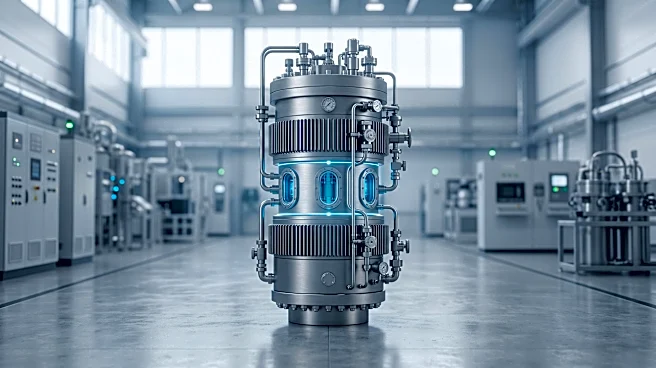
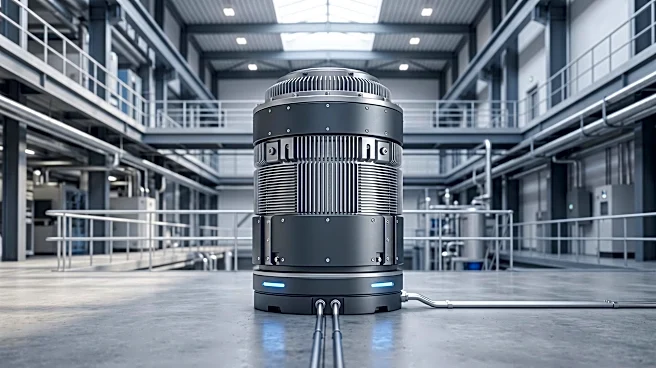
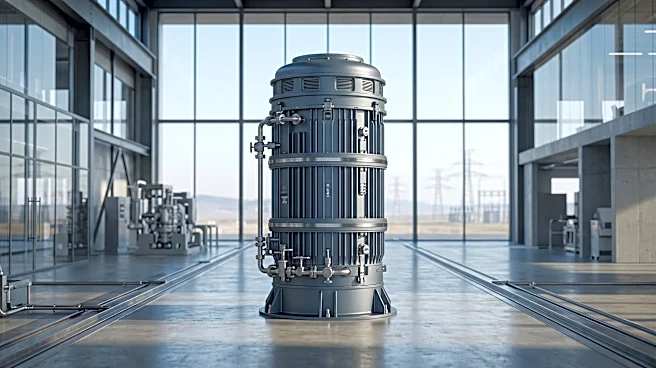
companies are favored by investors anticipating increased power demand from artificial intelligence (AI) operations. NuScale is a developer of small modular reactors (SMRs), which are compact nuclear power plants designed for factory construction and on-site assembly, aiming for faster and more cost-effective deployment compared to traditional large reactors. The company's SMR design was the first to receive approval from the U.S. Nuclear Regulatory Commission. NuScale's CEO, John Hopkins, noted in a third-quarter update that the company is transitioning from development to physical production, a crucial step for its future value, which relies on securing orders and building power plants. The rally in nuclear stocks coincided with a resurgence in the AI trade, as data centers powering AI models require substantial electricity, positioning nuclear power as a potential stable, low-carbon energy source.
Why It's Important?
The rally in NuScale Power and other nuclear energy stocks highlights a growing investor confidence in nuclear power as a critical solution for the escalating energy demands of the artificial intelligence sector. The development of SMRs by companies like NuScale is particularly significant for the U.S. energy landscape, offering a potentially more agile and scalable approach to nuclear energy deployment. This could lead to increased investment in nuclear technology, fostering innovation and job creation within the energy sector. The connection between AI's power consumption and nuclear energy also underscores a broader shift in how industries are evaluating sustainable and reliable energy sources. For the U.S., this trend could accelerate the transition to cleaner energy grids, reduce reliance on fossil fuels, and enhance energy independence. However, the long timelines, substantial upfront costs, and complex regulatory processes associated with nuclear plant construction remain significant factors influencing the sector's growth and NuScale's future revenue opportunities.
What's Next?
NuScale Power's future trajectory will largely depend on securing customer commitments and orders for its SMRs, continued regulatory progress, and supportive U.S. policy developments for nuclear power. The company's stock performance will likely remain sensitive to news from AI and data-center companies regarding their energy strategies, as these announcements can directly influence investor sentiment. Upcoming macroeconomic data, such as October PCE Inflation and third-quarter GDP, along with the Federal Reserve's December meeting, could also impact broader market conditions and, consequently, NuScale's stock. The ongoing demand for energy from AI and data centers is expected to continue driving interest in nuclear solutions, potentially leading to more partnerships and investment in the SMR sector. The industry will be watching for concrete steps from NuScale in transitioning from design approval to actual plant construction and operation, which will be crucial for validating its commercial viability.
Beyond the Headlines
The surge in nuclear energy stocks, exemplified by NuScale Power's recent jump, points to a deeper societal and economic shift driven by the rapid expansion of artificial intelligence. Beyond the immediate financial gains, this trend highlights the critical infrastructure challenges posed by AI's immense energy requirements. The renewed focus on nuclear power, particularly SMRs, could signify a long-term re-evaluation of nuclear energy's role in a sustainable future, moving past historical concerns to embrace its low-carbon output. This could lead to significant policy shifts, increased government funding for nuclear research and development, and a re-skilling of the workforce to support a burgeoning nuclear industry. Furthermore, the modular nature of SMRs could democratize nuclear power, making it accessible to a wider range of communities and industries, potentially decentralizing energy production and enhancing grid resilience. The ethical implications of powering advanced AI with nuclear energy, balancing technological progress with environmental responsibility, will also become increasingly prominent discussions.