



What's Happening?
Tallulah Willis, daughter of actor Bruce Willis, issued an apology after sharing a photo with her father on Instagram that she later deemed 'too intimate.' The photo, which has since been deleted, depicted Tallulah and Bruce Willis holding hands on an outdoor
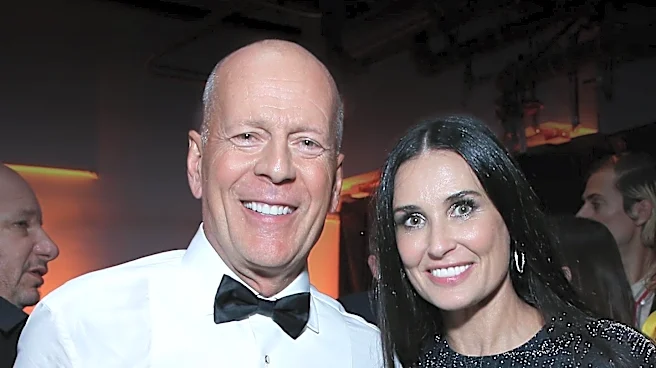
swing. Tallulah explained that she was excited by the sweetness of the moment and did not consider the photo's intimate nature before posting it. She expressed her love for her father and acknowledged that she 'can do better.' Bruce Willis was diagnosed with frontotemporal dementia (FTD) in February 2023, following an earlier diagnosis of aphasia. His family, including ex-wife Demi Moore and their daughters Rumer, Scout, and Tallulah, along with his current wife Emma Heming Willis and their daughters Mabel and Evelyn, have been publicly supportive throughout his health challenges.
Why It's Important?
This event highlights the complex challenges faced by public figures and their families when dealing with private health struggles, especially those involving cognitive decline like dementia. The public nature of the Willis family's journey with Bruce Willis's FTD diagnosis has brought increased awareness to the condition, but it also places their personal moments under scrutiny. Tallulah Willis's apology underscores the delicate balance between sharing personal experiences for support or awareness and maintaining privacy. It also reflects the broader societal discussion around digital intimacy and the boundaries of sharing personal moments on social media, particularly when a family member is vulnerable. The public's reaction, with many defending Tallulah's right to share, indicates a desire for authenticity and empathy in how such stories are presented.
What's Next?
While Tallulah Willis has apologized and deleted the specific photo, the broader conversation around privacy, celebrity, and dementia awareness is likely to continue. The Willis family has consistently used their platform to raise awareness about FTD, and their continued public presence will likely contribute to ongoing discussions about the disease and its impact on families. This incident may lead to more cautious sharing from public figures regarding their private family moments, especially those involving health issues. It also serves as a reminder for social media users to consider the implications of sharing intimate details, particularly when involving others who may be vulnerable or whose privacy preferences differ.
Beyond the Headlines
The incident touches upon the ethical considerations of sharing personal health journeys in the digital age, particularly when the individual affected may not be fully capable of consenting to the public dissemination of their image or story. It raises questions about the responsibility of family members and the media in portraying such sensitive situations. Furthermore, it underscores the emotional toll that dementia takes not only on the individual but also on their caregivers and loved ones, who navigate a complex landscape of grief, care, and public perception. The public's varied reactions to Tallulah's post—ranging from defense to criticism—illustrate the diverse perspectives on what constitutes appropriate sharing in the context of celebrity and illness, reflecting evolving societal norms around privacy and compassion.