



What's Happening?
Archer Aviation Inc., a San Jose-based company, has secured a new Market Survey Special Airworthiness Certificate from the U.S. Federal Aviation Administration (FAA). This certification allows Archer to begin piloted operations of its electric vertical
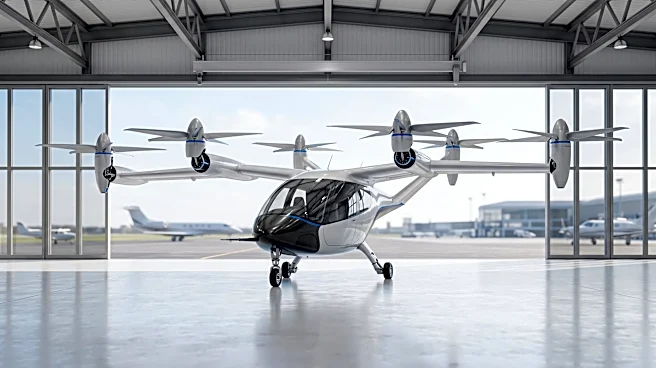
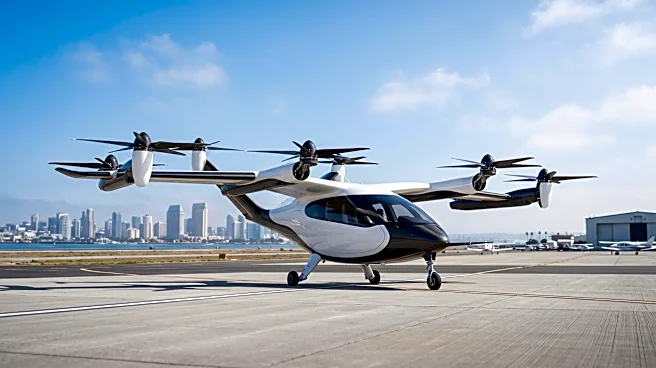
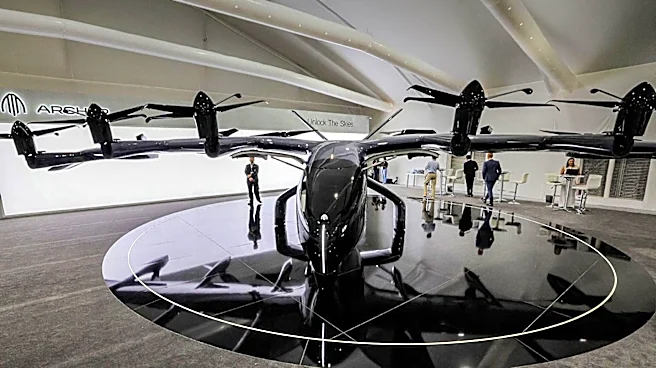
takeoff and landing (eVTOL) aircraft, named Midnight, in Los Angeles. The initial flights are anticipated to commence later this month from Hawthorne Municipal Airport, where Archer holds the master lease. This development is a crucial step for Archer as it prepares for potential passenger flights ahead of the L.A. 2028 Olympic and Paralympic Games, where it is an official partner of Team USA. According to Adam Goldstein, founder and chief executive of Archer, this certificate enables the company to advance towards passenger trials and revenue operations, serving as a building block for full Type Certification and routine urban air mobility operations at scale. Concurrently, Archer is expanding its defense business through an all-stock acquisition of Wisk Aero, SkyGrid, and Insitu from The Boeing Co., which is expected to close ahead of schedule.
Why It's Important?
This FAA certification marks a significant milestone for Archer Aviation and the broader urban air mobility sector in the U.S. It signals regulatory progress for eVTOL aircraft, potentially paving the way for new transportation options in congested urban areas. For Los Angeles, the introduction of piloted eVTOL operations could offer a glimpse into future mobility solutions, especially with the upcoming 2028 Olympic Games. The partnership with Team USA and the focus on the Olympics highlight the potential for these aircraft to serve high-profile events and provide innovative transport. However, Archer faces substantial financial challenges, reporting a net loss of $944.4 million over the trailing 12 months and a widening net loss in the third quarter. This high cash burn, driven by investments in certification, testing, and production, raises concerns about the company's long-term financial viability without significant revenue generation. Analyst David Moadel from 24/7 Wall St. notes that certification delays exacerbate spending and push revenue further into the future, creating dilution risk for investors.
What's Next?
Archer Aviation plans to initiate piloted operations in Los Angeles later this month, utilizing its new FAA certificate. These operations are intended to mature into passenger trials and revenue-generating services, particularly in anticipation of the L.A. 2028 Olympic and Paralympic Games. The company is also progressing with its acquisition of Boeing's Wisk Aero, SkyGrid, and Insitu, aiming to integrate these assets to build a physical AI platform and generate immediate defense revenue. This strategy is designed to offset the significant expenses associated with bringing the Midnight aircraft to market. However, Archer's ability to secure full commercial certification and generate sufficient revenue to cover its high infrastructure, research, and development costs remains a critical challenge. Analysts like Brett Schafer from The Motley Fool suggest that without a turnaround in its cash burn, Archer could deplete its funds within two years, making continued progress on commercialization vital for its stock price and ability to raise further capital.
Beyond the Headlines
The advancement of Archer Aviation's eVTOL technology has broader implications for urban planning, environmental sustainability, and the future of transportation. The integration of eVTOLs could alleviate ground traffic congestion in major cities, offering a faster and potentially more environmentally friendly alternative to traditional transport methods, given their electric propulsion. However, the high development costs and regulatory hurdles highlight the significant investment and time required to bring such innovative technologies to widespread commercial use. The company's expansion into the defense sector through acquisitions also suggests a strategic diversification, leveraging its core aviation technology for military applications, which could provide a more immediate revenue stream. This dual-use approach might become a common model for advanced aviation startups facing long commercialization timelines. The collaboration with Walt Disney Imagineering R&D further indicates the potential for eVTOL technology to extend beyond mere transportation, exploring applications in entertainment and immersive experiences, hinting at a future where air mobility is integrated into various aspects of daily life and leisure.