



What's Happening?
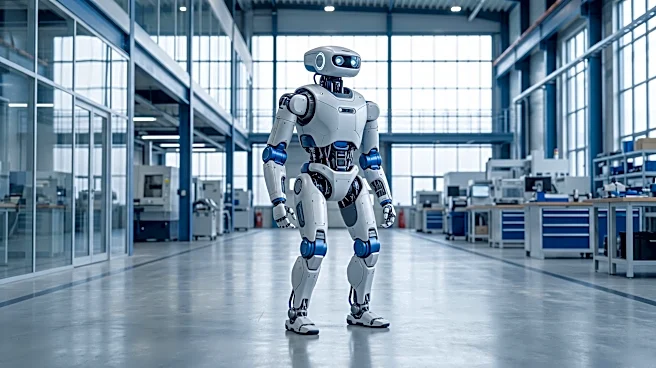
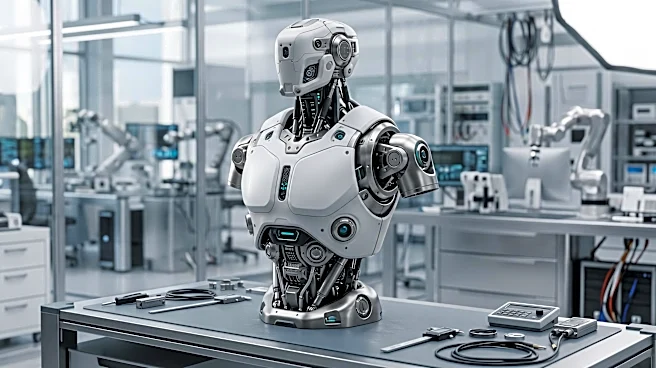
DST Global, a prominent internet investment firm, has joined Andreessen Horowitz (a16z), Khosla Ventures, and NVIDIA's venture arm NVentures in a $110 million seed funding round for Embo. Embo is a startup focused on developing AI models designed to function
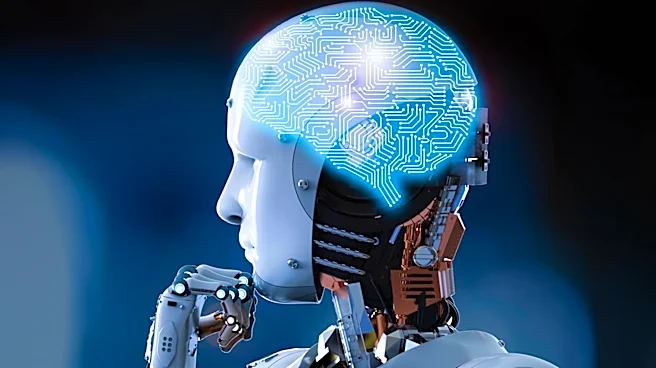
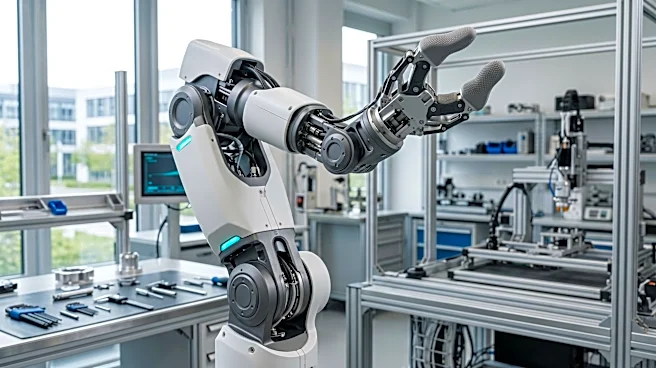
as the 'brain' for humanoid robots. The company's approach centers on 'world models,' which are AI systems that predict how a scene will evolve, learning from extensive internet video data. This technology allows robots to practice skills in simulated environments, improving through reinforcement learning. Embo aims to address key challenges in robotics, specifically generalization—enabling a robot trained in one setting to operate effectively in an unfamiliar one—and resilience, ensuring recovery when unexpected events occur, such as an object slipping or a drawer sticking. The company's leadership includes CEO Danijar Hafner, known for his work on world-model agents like the Dreamer series, and co-founder and CTO Wilson Yan, who developed VideoGPT. The team comprises talent from leading institutions such as Google DeepMind, Meta Superintelligence Labs, NVIDIA Cosmos, UC Berkeley, and MIT.
Why It's Important?
This significant investment in Embo highlights a growing trend of capital flowing into foundational models for robotics, indicating a strong belief in the future of physical AI. The participation of major investment firms like DST Global underscores the potential for this technology to revolutionize various U.S. industries, including manufacturing, logistics, and services. If Embo successfully develops reliable robots capable of operating in diverse and unpredictable environments, it could lead to increased automation, improved efficiency, and potentially a shift in labor demands across these sectors. The ability of robots to generalize and recover from errors could make them more adaptable and cost-effective for businesses, potentially driving down operational costs and increasing productivity. However, the long-term societal impact, including potential job displacement and the need for workforce retraining, will be a critical consideration as these technologies mature and become more widespread. The investment also signals confidence in the specific 'world model' approach, suggesting it could become a dominant paradigm in AI robotics development.
What's Next?
Embo is currently in an early stage, with no public product or disclosed customers, and its valuation, headquarters, and headcount remain undisclosed. The immediate next steps for Embo will likely involve further development and refinement of its AI models and potentially moving towards field trials to demonstrate the practical application and effectiveness of its 'world models' in real-world robotic scenarios. The company will need to prove its technology can deliver on its promises of generalization and resilience, especially given that rivals pursuing similar video-trained approaches have already secured substantial funding and are conducting field tests. The success of Embo could attract further investment and accelerate the adoption of advanced AI in robotics. Conversely, challenges in demonstrating practical performance or scaling the technology could impact its trajectory. The broader trend suggests continued rapid innovation and investment in physical AI, with more startups likely to emerge and compete in this space, pushing the boundaries of what robots can achieve.
Beyond the Headlines
The investment in Embo by firms like DST Global points to a deeper shift in the technological landscape: the transition from purely software-based AI to AI that interacts with the physical world. This development raises profound ethical and societal questions. As robots become more autonomous and capable of learning and adapting in complex environments, discussions around accountability, safety, and the nature of human-robot interaction will intensify. The concept of 'world models' allowing robots to 'imagine' scenarios and learn through reinforcement learning blurs the lines between machine intelligence and cognitive processes traditionally associated with living beings. This could lead to new legal frameworks and regulatory challenges concerning robotic autonomy and decision-making. Furthermore, the potential for widespread robotic deployment in various sectors could reshape the future of work, necessitating significant societal adjustments and policy considerations regarding education, employment, and economic equity. The long-term implications extend to how humans perceive and integrate advanced AI into daily life, potentially altering social structures and cultural norms.