



What's Happening?
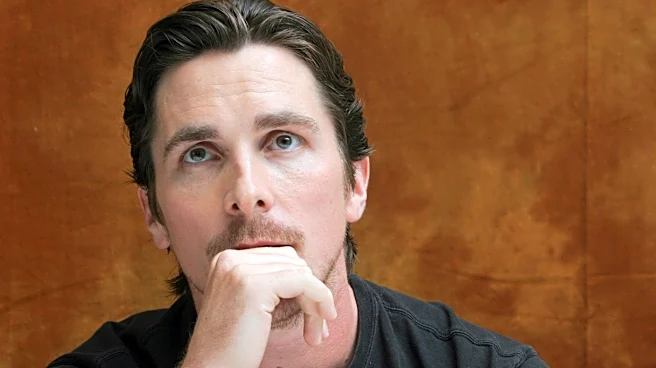
In 2004, actor Christian Bale underwent a drastic physical transformation for his leading role in the film 'The Machinist,' losing 62 pounds to portray Trevor Reznik, a character suffering from severe insomnia. This followed his muscular appearance in 'American
Psycho' just a few years prior. Bale's diet for the role reportedly consisted of little more than coffee and apples daily, leading him to weigh 120 pounds at six feet tall by the start of filming. Filmmakers intervened when they learned he intended to reach a goal weight of 99 pounds. Bale himself described this extreme dedication as an "asshole" thing to do, driven by a personal curiosity to test his mental and physical limits. He later rapidly regained muscle for his role in 'Batman Begins' and gained 40 pounds for 'Vice' in 2018, indicating a pattern of significant bodily changes for his characters.
Why It's Important?
Christian Bale's extreme weight loss for 'The Machinist' highlights the intense physical demands and potential health risks actors sometimes undertake for their craft. This practice raises questions about the boundaries of method acting and the responsibilities of film productions in safeguarding actors' well-being. While Bale's dedication is often lauded as a testament to his commitment, it also sparks debate on whether such transformations border on self-harm. The incident underscores a broader industry discussion about the pressures on actors to conform to specific physical ideals for roles, and the potential long-term health consequences. It also reflects a period in filmmaking where such extreme measures were seemingly more accepted, contrasting with current safeguarding concerns that might prevent similar stunts today.
What's Next?
The discussion surrounding actors' extreme physical transformations is likely to continue, particularly as health and safety standards in the entertainment industry evolve. While Bale's past actions are now part of cinematic history, future productions may face increased scrutiny and implement stricter guidelines to prevent actors from undertaking potentially harmful weight changes. There could be a greater emphasis on using prosthetics or visual effects to achieve desired character appearances, rather than relying solely on an actor's physical alteration. Additionally, conversations about mental health and body image within the acting profession may gain more prominence, encouraging healthier approaches to character preparation.
Beyond the Headlines
Bale's rationale for his extreme weight loss—testing his own discipline and limits—reveals a deeper psychological aspect of method acting. It suggests that for some actors, the physical transformation is not just about embodying a character but also a personal challenge and an exploration of their own endurance. This raises ethical considerations about the line between artistic dedication and self-endangerment. The public's fascination with such transformations also reflects a broader cultural interest in extreme human endeavors, often blurring the lines between admiration for commitment and concern for well-being. This case serves as a powerful example of the complex interplay between art, personal sacrifice, and the evolving standards of safety and ethics in the film industry.