







What's Happening?
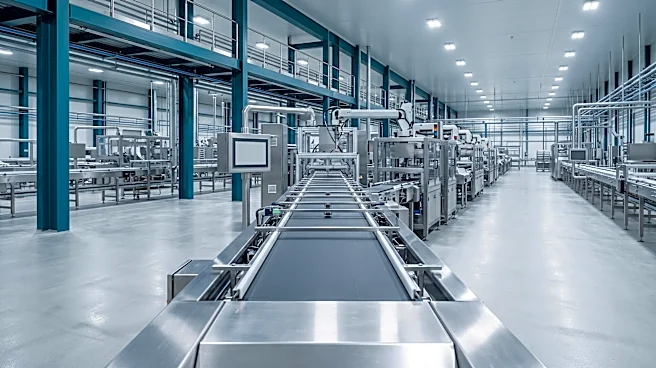
China is making significant strides in the large-scale production of cell-cultivated meat, moving beyond research and development to overcome industry challenges related to cost and scale. Companies like Shanghai-based CellX, which utilizes 3D bioprinting
technology, have opened pilot facilities capable of producing several tonnes of cultivated meat annually and are planning larger facilities targeting hundreds of tonnes. This push is driven by China's status as the world's largest meat consumer and the pressures faced by its traditional meat industry, including disease outbreaks like African swine fever, which led to a 40% loss in the pig population between 2018-2019. The Chinese government has emphasized the need for a diversified food supply system to ensure self-sufficiency, exploring alternative proteins through advancements in biological science and technology. The Ministry of Agricultural and Rural Affairs even included the production of 'future foods' and research on cell-cultivated meat in its 2021 five-year plan, indicating strong governmental support for the sector's development.
Why It's Important?
The advancement of large-scale cell-cultivated meat production in China holds significant implications for global food security, sustainability, and the alternative protein market. As the world's largest meat consumer, China's success in scaling cultivated meat could substantially reduce the environmental impact associated with traditional livestock farming, including greenhouse gas emissions and land use. It also offers a potential solution to the vulnerability of conventional meat supply chains to disease outbreaks, which can cause price volatility and food shortages. For the U.S. and other countries, China's progress could accelerate global competition and innovation in the cultivated meat sector, potentially leading to faster cost reductions and wider consumer adoption. While the U.S. has approved the sale of cultivated meat, China's massive market and manufacturing infrastructure could position it as a dominant player, influencing international standards and trade in alternative proteins. This development could also impact U.S. agricultural exports, particularly if China's domestic alternative protein production reduces its reliance on imported meat.
What's Next?
The immediate next steps for China's cultivated meat industry involve transitioning from pilot facilities to full-scale commercial production. Companies like CellX are planning larger facilities to produce hundreds of tonnes of meat annually, which will be crucial for achieving economies of scale and reducing costs. Continued government support and guidance, as highlighted by food scholar Thomas David DuBois, will be central to this development, potentially through further policy incentives, funding for research, and regulatory frameworks. The APAC Society for Cellular Agriculture (APAC-SCA) suggests that China's existing biomanufacturing ecosystem, including fermentation and pharmaceutical manufacturing, will be vital in this transition. As production scales up, the focus will likely shift to consumer acceptance and market penetration within China, which could involve public education campaigns and competitive pricing strategies. The global cultivated meat industry will closely watch China's progress, as its ability to overcome cost and scale bottlenecks could set precedents for other nations.
Beyond the Headlines
Beyond the immediate economic and food security implications, China's aggressive pursuit of cultivated meat production touches upon deeper ethical and cultural dimensions. The adoption of cultivated meat could significantly improve animal welfare by reducing the number of farmed animals slaughtered, aligning with growing global concerns about ethical food sourcing. Culturally, integrating 'future foods' into a diet where traditional meat consumption is deeply ingrained presents a unique challenge and opportunity. Success in China could normalize cultivated meat on a global scale, influencing dietary habits and perceptions of food technology worldwide. Furthermore, the emphasis on self-sufficiency through alternative proteins reflects a broader geopolitical strategy to enhance national resilience against global supply chain disruptions and environmental challenges. This move could also spur a re-evaluation of traditional agricultural practices and investment in biotechnological solutions for food production, potentially leading to a paradigm shift in how nations approach food security and sustainability in the 21st century.