








What's Happening?
L3Harris Technologies' Rochester operation has been awarded a $96.9 million purchase order from the U.S. Marine Corps. This contract is for the manufacturing of communications radios and components as part of the Marine Corps Wideband Satellite-Expeditionary
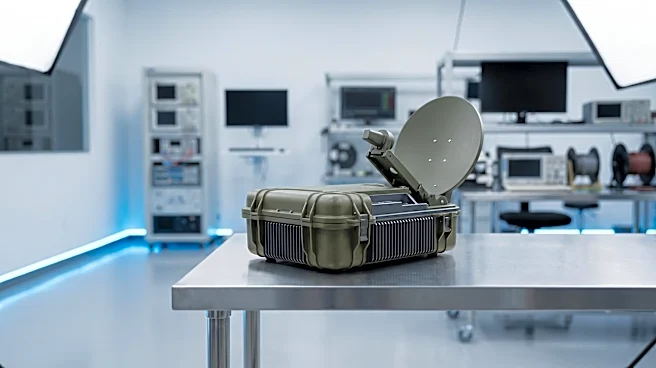
(MCWS-X) program. The award will enable the Marine Corps to acquire additional MCWS-X communications terminals from L3Harris through 2031. The work for this contract will be performed in Rochester, New York, with an expected completion date of September 2031. The MCWS-X system is a multiband satellite communications terminal designed to provide Marines with rapid, secure, and resilient connectivity, particularly in challenging battlefield environments. Its man-portable design allows for setup in under 15 minutes and operates across multiple frequencies and waveforms. The program utilizes L3Harris' Panther II terminal, engineered to maintain communication capabilities even in degraded operational conditions.
Why It's Important?
This significant contract underscores the critical role of Rochester's L3Harris facility in supporting U.S. national security and military readiness. The MCWS-X system provides a vital tactical advantage for the Marine Corps, ensuring reliable communication in diverse and often hostile environments. The ability to establish secure and resilient connectivity quickly is paramount for modern military operations, enhancing situational awareness and coordination for warfighters. The contract also represents a substantial economic boost for the Rochester area, securing jobs and highlighting the advanced manufacturing capabilities of its workforce. U.S. Sen. Chuck Schumer emphasized the importance of Rochester's skilled labor in producing these cutting-edge systems, reinforcing the region's contribution to defense technology. This award follows a previous $263 million Marine Corps contract in 2020 for MCWS-X systems, indicating a continued trust in L3Harris' capabilities and products.
What's Next?
L3Harris Rochester will proceed with the manufacturing and delivery of the communications radios and components to the U.S. Marine Corps, with work continuing through September 2031. The company will focus on fulfilling the terms of this purchase order, ensuring the production of high-quality, reliable MCWS-X systems. The ongoing success of this program could lead to further contracts and continued investment in L3Harris' Rochester operations. The Marine Corps will integrate these new terminals into their communication infrastructure, enhancing their operational capabilities and readiness. This sustained partnership between L3Harris and the Department of Defense highlights the continuous need for advanced communication technologies in military applications, suggesting a stable future for defense contractors specializing in such equipment. The Rochester workforce will remain central to these efforts, contributing to national security through technological innovation and manufacturing expertise.
Beyond the Headlines
The contract awarded to L3Harris Rochester reflects a broader strategic imperative within the U.S. military to enhance communication resilience and adaptability in an evolving global threat landscape. The emphasis on multiband satellite communications and rapid deployment capabilities speaks to the need for robust systems that can operate effectively in contested environments, where traditional communication channels might be compromised. This investment in advanced tactical communication equipment also highlights the ongoing technological competition among global powers, with the U.S. military seeking to maintain its technological edge. Furthermore, the localization of such high-tech manufacturing in places like Rochester underscores the importance of domestic defense industrial bases, ensuring supply chain security and fostering innovation within the U.S. The development and production of these systems also contribute to the broader ecosystem of defense technology, potentially leading to spin-off innovations with civilian applications in areas like emergency response and remote connectivity.