


What's Happening?
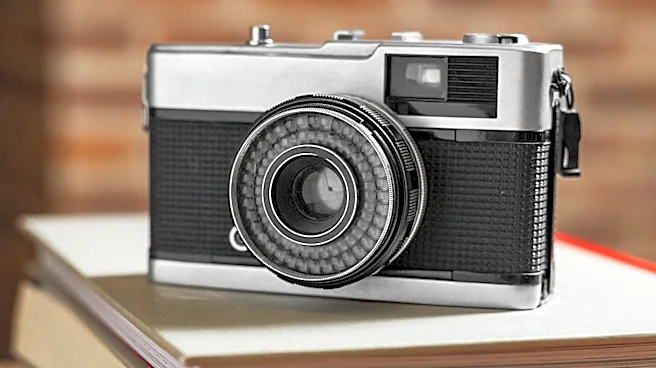
The Pentax K1000, a film camera produced from 1976 to 1997, continues to be a highly respected and widely used instrument in photography education, nearly 50 years after its introduction. Known for its 'three-dial' simplicity, the K1000 focuses solely
on shutter speed, aperture, and manual focus, making it a purely manual device without modern features like autofocus, program modes, or auto ISO. This design philosophy forces photographers to develop a direct, physical connection with light and exposure. Art schools and photography instructors consistently choose the K1000 for its pedagogical value, as it removes automated excuses for missed exposures, holding students accountable for understanding fundamental photographic principles. The camera's robust, mechanical construction, initially manufactured in Japan, then Hong Kong, and finally China, ensured its longevity and reliability, making it a staple in classrooms across the country.
Why It's Important?
The enduring relevance of the Pentax K1000 highlights a significant aspect of photographic education and the value of foundational skills in an increasingly automated world. Its continued use in art schools underscores a belief that mastering basic exposure mechanics is crucial before engaging with complex digital systems. This approach ensures that emerging photographers develop a deep understanding of light and composition, rather than relying on camera algorithms. For the photography industry, the K1000's legacy serves as a reminder that simplicity and durability can create lasting value, contrasting with the rapid obsolescence often seen in modern tech. It also impacts the market for vintage camera equipment, maintaining a demand for a model that, despite its age, offers a unique learning experience and a reliable tool for those seeking to 'recalibrate' their exposure instincts.
What's Next?
The Pentax K1000 is expected to remain a fixture in photography curricula, continuing to serve as a foundational teaching tool. Its accessibility and mechanical nature mean that it will likely continue to be a popular choice for students and enthusiasts looking to learn the basics of photography without the distractions of advanced digital features. The market for used K1000 bodies and compatible K-mount lenses is also likely to persist, supported by its reputation for durability and the relative ease of maintenance for independent camera repair shops. As digital photography continues to evolve, the K1000's role as a counterpoint, emphasizing manual control and deliberate practice, will likely solidify its place as a timeless educational asset.
Beyond the Headlines
The sustained popularity of the Pentax K1000 points to a broader cultural appreciation for analog processes and the tangible skills they foster. In an era dominated by instant gratification and automated solutions, the K1000 champions intentionality and craftsmanship. Its 'three-dial' simplicity encourages a meditative approach to photography, where each decision about shutter speed, aperture, and focus is a conscious act. This not only builds technical proficiency but also cultivates patience and a deeper artistic sensibility. The camera's design philosophy, prioritizing durability over fleeting features, also offers a subtle critique of consumer culture's emphasis on constant upgrades, suggesting that true value can be found in tools built to last and to empower the user's skill rather than replace it.