






What's Happening?
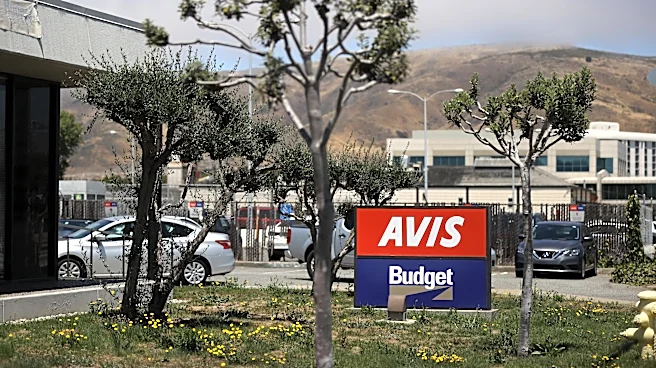
Avis Budget Group, Inc. (CAR), a global mobility company operating brands like Avis, Budget, and Zipcar, experienced a significant stock rally of approximately 42% over the past 30 days, moving from $101.74 on October 28, 2026, to about $144.54. This
surge occurred despite the company's third-quarter 2026 report, published on November 3, showing a 2% year-over-year revenue decrease to $3.436 billion, a 49% drop in net income to $183 million, and an 8% slip in adjusted EBITDA to $513 million. Earnings per share of $5.15 also missed the $8.63 consensus. Management attributed a $50 million EBITDA shortfall to weaker demand in August and a 2.8% decline in TSA checkpoint volumes. However, investors focused on positive indicators such as a record vehicle utilization of 74.1%, a nearly 4% improvement in revenue per rental day, and guidance for approximately $165 million in fourth-quarter adjusted EBITDA, a substantial increase from $5 million a year prior. A $650 million legal settlement received in October also contributed to balance sheet flexibility. The rally accelerated in late November as capital shifted from AI and semiconductor stocks to domestic cyclicals.
Why It's Important?
The performance of Avis Budget Group's stock is a key indicator for the broader U.S. travel and transportation sectors, reflecting investor sentiment and underlying economic conditions. The company's asset-intensive model, relying on a large vehicle fleet funded through debt programs, makes its earnings highly sensitive to air travel volumes, used-vehicle residual values, and interest expenses. The recent stock rally, despite a mixed earnings report, suggests that investors are prioritizing operational efficiencies and future guidance over immediate financial shortfalls. The emphasis on record vehicle utilization and improved revenue per rental day indicates a focus on core business strength and pricing power. The shift of capital from technology stocks to domestic cyclicals like Avis Budget Group highlights a broader market trend, potentially signaling a rotation towards value or recovery plays in the U.S. economy. This could impact other companies in the travel and automotive rental industries, as well as investors seeking to diversify their portfolios in a changing market landscape. The company's substantial debt load of approximately $28.3 billion and a 7.9x net corporate leverage ratio also make it particularly sensitive to interest rate shifts and refinancing costs, which are critical factors for financial stability in the current economic climate.
What's Next?
The next significant checkpoint for Avis Budget Group will be the release of its fourth-quarter 2026 results, anticipated in February 2027, alongside its 2027 outlook. Investors will closely scrutinize the reported adjusted EBITDA against the guided figure of approximately $165 million. A key focus will be whether revenue per rental day growth can effectively offset lower rental volumes. Fleet economics, including per-unit depreciation, used-vehicle residual values, and the pace of fleet right-sizing, will be crucial in determining future margins. The company's substantial debt and leverage ratio mean that refinancing costs and interest-rate shifts will continue to be significant factors influencing its financial health. Demand indicators, such as TSA checkpoint volumes and air travel bookings, will remain the clearest signals for revenue trends. Additionally, competitive pricing pressures from rivals like Hertz and regional operators could impact rental rates. The market will also be watching for any further shifts in capital allocation, as the recent rally was partly driven by a rotation away from AI and semiconductor stocks, suggesting broader market dynamics will continue to influence CAR's performance.
Beyond the Headlines
The recent stock rally of Avis Budget Group, despite a challenging earnings report, underscores a deeper market dynamic where investor perception of operational efficiency and future guidance can outweigh immediate financial setbacks. This highlights the psychological aspect of market movements, where specific positive indicators, such as record vehicle utilization and improved pricing, can trigger significant investor confidence even when overall revenue and profit decline. The company's reliance on an asset-intensive model and its sensitivity to external factors like air travel volumes and interest rates also bring to light the inherent volatility and risks within the rental car industry. The shift of capital from high-growth technology sectors to more traditional, cyclical industries like car rental suggests a potential re-evaluation of investment strategies in the U.S. market. This could indicate a broader trend of investors seeking stability or value in sectors that may have been overlooked during periods of rapid tech growth. Furthermore, the impact of a large legal settlement on balance sheet flexibility demonstrates how non-operational events can significantly influence a company's financial standing and investor appeal, offering a temporary buffer against operational challenges.