







What's Happening?
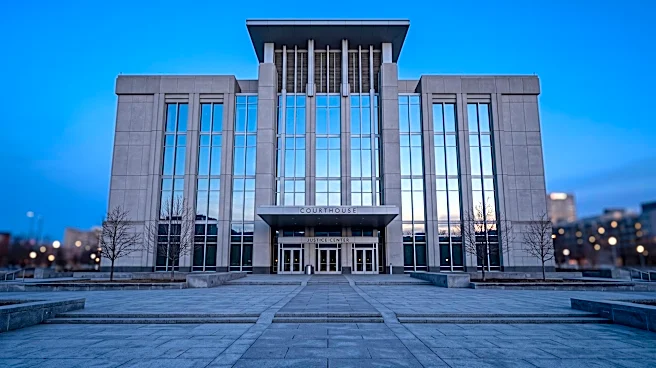
The proposed $2.1 billion Springfield courthouse project, known as Liberty Junction, is encountering significant local opposition and zoning hurdles. The development team, comprising Virginia real estate firm FD Stonewater and Boston-based CoJo Real Estate
(co-founded by Conan Harris, husband of U.S. Representative Ayanna Pressley), was selected by Massachusetts officials as the lowest-cost option for the new justice center. However, Springfield Mayor Domenic J. Sarno has strongly criticized the chosen location and developers, stating the project 'does not come close' to being transformative for the city. Additionally, the proposed 100-foot-tall building exceeds the 60-foot zoning height limit for the central parcel at 125 Liberty St., requiring a sign-off from Springfield’s Zoning Board of Appeals. A key strip of land intended for the courthouse's main entry plaza along Chestnut Street is also owned by the city, and the developers do not control it. Losing bidders have launched a campaign urging Governor Maura Healey to halt construction.
Why It's Important?
This situation highlights the complexities and potential conflicts that can arise between state-level project approvals and local municipal control, particularly concerning large-scale urban development. The project's significant cost, with $1.6 billion in rent payments over 40 years, raises questions about fiscal responsibility and long-term financial commitments for the state. The involvement of a development firm co-founded by the husband of a prominent U.S. Representative, Ayanna Pressley, could also draw scrutiny regarding potential conflicts of interest or influence, even though her husband's partner has since stepped away from the project. The dispute over zoning and land ownership gives local officials, particularly Mayor Sarno, considerable leverage, potentially delaying or altering the project significantly. This case also underscores the challenges of urban revitalization, where different stakeholders may have conflicting visions for development and economic growth, impacting local taxpayers and the broader community.
What's Next?
The Liberty Junction developers will need to address the zoning height discrepancy, either by seeking a variance from Springfield’s Zoning Board of Appeals or by redesigning the building to comply with existing regulations. Obtaining a variance would give Springfield officials additional leverage over the contentious project. Furthermore, the developers must secure the city-owned land intended for the main entry plaza, which currently remains under the control of the Springfield Redevelopment Authority, whose board is largely appointed by Mayor Sarno. State officials have yet to sign a lease agreement for the project, indicating that the final design and land acquisition details are still pending. The ongoing public and legal campaign by losing bidders and local officials against the project will likely continue to exert pressure on Governor Healey and state authorities, potentially leading to further negotiations, modifications, or even a reevaluation of the state's choice for the courthouse.
Beyond the Headlines
This development project in Springfield touches upon deeper themes of local autonomy versus state authority, the influence of political connections in business ventures, and the challenges of urban planning and revitalization. The resistance from Mayor Sarno and other local officials reflects a desire to maintain control over their city's development trajectory and ensure projects align with local priorities, rather than being dictated by state-level decisions. The controversy also brings to light the intricate web of relationships between political figures, their families, and private sector interests, which can sometimes lead to perceptions of undue influence or favoritism. Ethically, the situation raises questions about transparency and accountability in public-private partnerships, especially when significant public funds are involved. The outcome of this dispute could set precedents for how large-scale infrastructure projects are negotiated and implemented in Massachusetts, potentially influencing future collaborations between state and local governments and private developers.