




What's Happening?
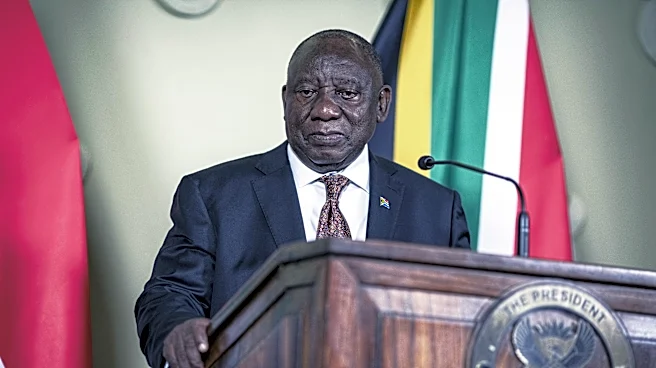
South Africa is moving to establish a R100 million venture capital fund and a complementary credit guarantee facility aimed at supporting artificial intelligence (AI) start-ups and emerging technology companies. This initiative follows President Cyril
Ramaphosa’s high-level working visit to Silicon Valley in the United States, where he engaged with technology executives, entrepreneurs, and venture capital investors. The proposed fund is part of Pretoria’s strategy to position South Africa as a competitive hub for AI investment, digital infrastructure, and technological innovation. President Ramaphosa announced that the government would collaborate with private investors, entrepreneurs, and development finance institutions to mobilize capital for promising South African technology businesses. The fund is designed to combine public and private resources, while the credit guarantee mechanism seeks to mitigate financing risks for emerging enterprises. Andile Ngcaba, Executive Chair and Founding Partner of Convergence Partners and Solcon Capital, has pledged 25 percent of the proposed fund, equivalent to R25 million, and challenged other development finance institutions and private-sector players to contribute the remaining resources. The fund is currently in the proposal and mobilization stage, with its operational structure, eligibility requirements, and disbursement timetable yet to be finalized.
Why It's Important?
This initiative is significant for South Africa as it aims to foster domestic innovation and reduce reliance on foreign technology providers, particularly in the rapidly evolving field of artificial intelligence. By establishing a dedicated fund, South Africa seeks to address the high cost of computing infrastructure, which is a major barrier for local AI businesses. The country already hosts over 70 percent of Africa’s data centers, and this fund could further solidify its position as a regional technology hub. The government believes its renewable energy resources, established financial sector, and growing digital infrastructure can attract international investment in AI computing facilities. This strategic move is also crucial for creating employment opportunities and preparing the workforce for technological changes. The emphasis on developing local technological capabilities and data sovereignty reflects a broader ambition to ensure African countries secure a stronger position in the global AI economy, rather than merely being consumers of technology developed elsewhere.
What's Next?
The South African government is expected to finalize the operational structure, eligibility requirements, and disbursement timetable for the R100 million AI start-up fund. President Ramaphosa has also directed the government to develop a national AI action plan within 90 days, with implementation priorities covering public services, investment in digital infrastructure, local technological capabilities, and risk management associated with AI. This plan is anticipated to include practical applications in education, healthcare, agriculture, and public administration, alongside measures to strengthen cybersecurity and protect critical infrastructure. Key elements of this program are expected to be outlined during the President’s State of the Nation Address in February 2027. The success of this initiative will depend on translating the commitments made during the Silicon Valley visit into accessible financing for start-ups and commercially viable technology enterprises, as well as the ability of emerging businesses to access necessary resources for expansion.
Beyond the Headlines
The proposed AI fund and national action plan highlight a growing recognition among African nations of the need to actively participate in the development of advanced technologies. This move by South Africa could set a precedent for other developing economies seeking to build their own technological ecosystems and reduce dependence on global tech giants. The emphasis on data sovereignty and domestic technological capabilities also points to a broader geopolitical trend where nations are increasingly prioritizing control over their digital infrastructure and data. The challenge of securing substantial investment in electricity generation, computing capacity, and technical skills underscores the complex interplay between technological ambition and foundational infrastructure development. This initiative also raises questions about equitable access to these new technologies within South Africa and the potential for AI to exacerbate or alleviate existing socio-economic disparities.