






What's Happening?
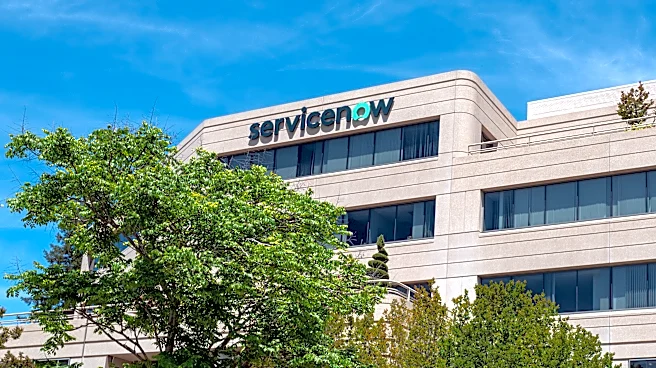
ServiceNow, a cloud-based software platform headquartered in Santa Clara, California, is leveraging AI, data, and workflows to automate various enterprise operations for employees and customers. The company's platform is designed to manage incidents,
service requests, problems, and change management across departments such as IT, Human Resources, and customer service. ServiceNow's IT Service Management (ITSM) solution, which includes features like self-service portals, configuration management, and AI-powered 'Now Assist,' helps IT professionals streamline operations. The platform's extensive integration environment allows for the extension of its functionality and supports workflow processes across different departments. ServiceNow is a public company trading on the NYSE under the symbol NOW, and it has reported significant annual and quarterly revenues, indicating its strong position in the enterprise software industry.
Why It's Important?
ServiceNow's approach to automating enterprise operations is significant for U.S. businesses seeking to enhance efficiency and reduce operational complexities. By integrating AI and workflow automation, the platform allows companies to manage critical IT and business processes from a single system, potentially leading to cost savings and improved service delivery. The ability to support workflows across various departments, from IT to HR, means that organizations can achieve a more unified and responsive operational environment. This is particularly crucial in a competitive landscape where rapid problem-solving and efficient service management are key differentiators. Companies that adopt such platforms stand to gain a competitive edge through optimized resource allocation and faster resolution times, while those that lag in automation may face increased operational costs and reduced agility.
What's Next?
As ServiceNow continues to evolve its cloud-based platform, future developments are likely to focus on further enhancing its AI and automation capabilities. The company will likely continue to expand its integration ecosystem, allowing for seamless connectivity with an even broader range of enterprise applications. Businesses considering ServiceNow will need to carefully plan for implementation, including workflow design, data migration, and governance, to maximize the platform's benefits. The ongoing trend towards digital transformation suggests that demand for comprehensive automation solutions like ServiceNow will continue to grow, prompting the company to innovate and adapt to emerging enterprise needs and technological advancements.
Beyond the Headlines
The widespread adoption of platforms like ServiceNow highlights a broader shift in how U.S. enterprises approach operational management. The integration of AI into core business processes raises important considerations regarding data privacy, algorithmic bias, and the future of work. As more tasks become automated, there will be a growing need for skilled professionals who can manage and optimize these complex systems, potentially leading to new job roles and training requirements. Furthermore, the reliance on a single, integrated platform for multiple departmental functions underscores the importance of robust cybersecurity measures and disaster recovery planning to ensure business continuity and data integrity. The ethical implications of AI-driven decision-making within HR and customer service also warrant ongoing scrutiny and development of best practices.