

What's Happening?
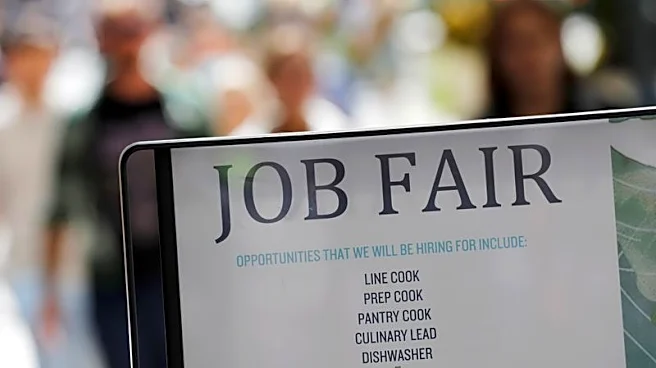
The July jobs report is expected to show a modest gain of 83,000 nonfarm payrolls, with the unemployment rate remaining at 4.2%. This follows a slow June, which saw a gain of just 57,000 jobs. The Federal Reserve is closely monitoring these figures as
it balances confidence in the labor market with concerns about inflation. The labor force participation rate recently fell to 61.5%, its lowest since March 2021, raising questions about the health of the labor market. Economists are particularly focused on wage growth and sector-specific employment trends.
Why It's Important?
The jobs report is a critical indicator of economic health, influencing Federal Reserve policy decisions, including potential interest rate hikes. A stable or improving labor market could support economic growth, while persistent weaknesses may prompt policy adjustments. The decline in labor force participation, especially among prime-age workers, suggests underlying challenges in the job market. These trends have implications for economic recovery, consumer spending, and overall economic stability, affecting businesses and policymakers alike.
What's Next?
Economists and policymakers will analyze the July jobs report for insights into labor market trends and potential policy responses. The Federal Reserve may consider adjusting interest rates based on the report's findings, particularly if inflation remains a concern. Businesses and investors will also be watching for signs of economic recovery or further challenges. The report's impact on consumer confidence and spending will be crucial in shaping economic forecasts for the remainder of the year.