





What's Happening?
A new trend called 'skinimalism' is gaining traction in the skincare industry, advocating for a minimalist approach that prioritizes simplicity, consistency, and purposeful product selection. This movement encourages consumers to move away from elaborate,
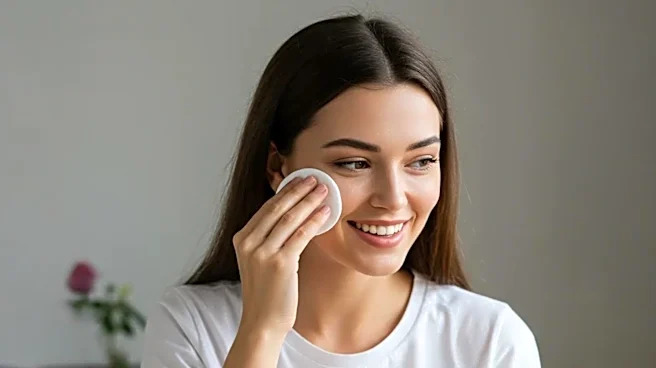
multi-step routines, which can sometimes involve up to ten different products, towards a more streamlined three-step regimen: cleanse, moisturize, and protect with sunscreen. The core idea is to identify what the skin truly needs and build a routine that can be followed consistently, rather than layering numerous products. Dermatologists, including those from the American Academy of Dermatology, support this approach, emphasizing that more products do not necessarily lead to better results and can even cause irritation. The shift is also driven by a desire for more practical and evidence-based skincare choices, moving beyond the influence of social media trends that often promote extensive product use.
Why It's Important?
The rise of skinimalism signifies a notable shift in consumer behavior and industry focus within the U.S. beauty market. For consumers, it offers a more accessible and potentially less irritating approach to skincare, reducing the financial burden and time commitment associated with extensive routines. This trend could lead to a decrease in impulse purchases of numerous specialized products, favoring instead high-quality, multi-functional items. For skincare brands, this means a potential pivot in product development and marketing strategies, emphasizing efficacy, transparency of ingredients, and the benefits of simplicity rather than promoting complex product lines. Brands that can effectively communicate the value of fewer, more potent products are likely to gain market share, while those heavily reliant on selling a wide array of niche products may need to adapt. The emphasis on evidence-based choices also empowers consumers to make more informed decisions about their skin health.
What's Next?
As skinimalism continues to grow, the beauty industry is likely to see further innovation in multi-tasking products that combine several benefits into one formula, such as moisturizers with SPF or serums with multiple active ingredients. Marketing campaigns will likely shift to highlight the effectiveness and simplicity of products, moving away from promoting extensive routines. Retailers may also adjust their merchandising strategies to feature curated, minimalist skincare sets. Consumers can expect more educational content from dermatologists and brands focusing on understanding individual skin needs and selecting essential products. This trend may also influence the development of sustainable packaging and ingredient sourcing, as a focus on fewer, higher-quality products often aligns with broader eco-conscious values. The long-term impact could see a more informed and less overwhelmed consumer base, leading to a more sustainable and effective approach to skincare.
Beyond the Headlines
Beyond the immediate impact on product sales and marketing, skinimalism reflects a broader cultural shift towards mindfulness and intentional consumption. In an era of overwhelming choices and information, consumers are increasingly seeking simplicity and authenticity in various aspects of their lives, including beauty. This trend challenges the long-standing narrative in the beauty industry that more is always better, prompting a re-evaluation of what constitutes 'effective' skincare. It also highlights the growing influence of scientific evidence and dermatological advice over influencer-driven trends, fostering a more critical approach to beauty claims. Ethically, skinimalism can contribute to reducing waste from excessive product consumption and packaging. Legally, it may encourage stricter regulations on ingredient transparency and product efficacy claims, as consumers become more discerning about what they apply to their skin and why.