





What's Happening?
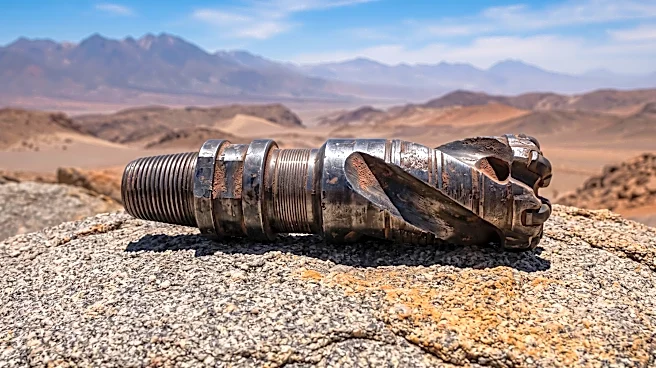
Super Copper Corp. has finished drilling eight holes at its Cordillera Cobre copper project located in Chile’s Atacama Region. The company announced on November 3 that assays from the first four holes are currently undergoing quality-assurance and quality-control
review. A ninth hole is being drilled to test deeper levels of the project. This drilling campaign, which had covered approximately 2,348 meters by September 29, aims to validate previous visual observations of copper mineralization. While visible copper sulphides were noted in three of the initial four holes, these observations do not confirm the average grade or the commercial viability of the mineralization. The company is also progressing its Castilla project, with an initial drilling campaign targeted for the second quarter of 2027, following ongoing Phase 2 geophysical work. The current focus for Cordillera Cobre is the release of laboratory assay results, which will provide crucial data on metal concentrations.
Why It's Important?
The progress at Super Copper's Cordillera Cobre project is significant for the global copper market, which is vital for various U.S. industries, including electronics, construction, and renewable energy. Copper is a critical component in electric vehicles, charging infrastructure, and green technologies, making reliable supply chains increasingly important. The successful identification and development of new copper resources can help stabilize prices and ensure availability for U.S. manufacturers. If the assay results confirm high-grade copper mineralization, it could attract further investment and contribute to the long-term supply of this essential metal. Conversely, unfavorable results could lead to increased reliance on existing, potentially more expensive, sources or necessitate greater investment in recycling technologies. The project's success or failure will influence the broader market dynamics for copper, impacting U.S. companies that depend on a steady and affordable supply.
What's Next?
The immediate next step for Super Copper is the disclosure of the assay results from the first four holes at Cordillera Cobre. These results are critical for assessing the project's potential and will determine the subsequent phases of exploration and development. The company will also continue drilling the ninth hole to explore deeper geological structures. For the Castilla project, Phase 2 geophysical work is underway to refine targets for an initial drilling campaign planned for the second quarter of 2027. Investors and industry observers will closely monitor these developments, as they will provide clearer indications of the projects' economic viability and future contribution to copper supply. The company's ability to transition from exploration evidence to a demonstrated resource will be key to securing further financing and advancing towards commercial production.
Beyond the Headlines
The ongoing exploration efforts by companies like Super Copper highlight the increasing global demand for critical minerals, particularly copper, driven by the energy transition and technological advancements. This demand places pressure on mining companies to explore new frontiers and optimize existing operations, often in regions with complex geological and regulatory landscapes like Chile. The distinction between visual mineralization and laboratory-confirmed grades underscores the inherent risks and uncertainties in mineral exploration. The success of such projects can have broader geopolitical implications, influencing trade relationships and resource security for nations, including the U.S., that are heavily reliant on imported raw materials. Furthermore, the environmental and social impacts of large-scale mining operations in sensitive regions like the Atacama Desert will remain a critical consideration, shaping public perception and regulatory frameworks.