


What's Happening?
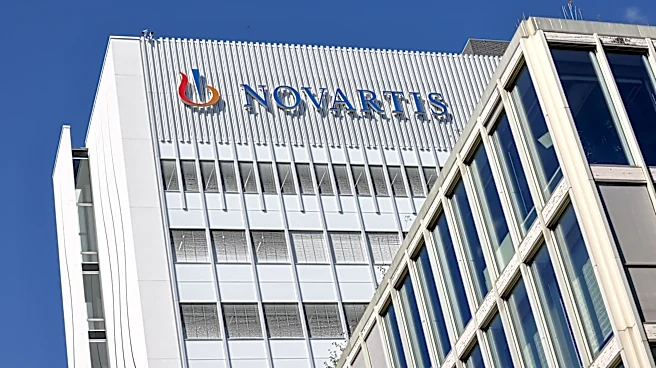
Vas Narasimhan, CEO of Novartis, has voiced skepticism regarding the notion that artificial intelligence (AI) will cure cancer within the next decade. In an interview with the Financial Times, Narasimhan acknowledged AI's potential to enhance drug development
timelines and clinical success rates. He anticipates that AI could reduce the average drug development period from 12 years to approximately 8 years over the coming decade. Additionally, he projects an increase in the success rate for drugs entering human clinical trials, from 8% to 12%. However, Narasimhan emphasized the inherent complexity of human biology and the limitations of clinical trials as significant hurdles. He noted that current understanding of the human body is limited to about 5%, which restricts AI's ability to accurately predict outcomes in such intricate biological systems. This perspective suggests a more measured and realistic outlook on AI's immediate transformative impact in oncology.
Why It's Important?
This assessment from a leading pharmaceutical CEO is important for managing expectations surrounding AI's role in healthcare and drug discovery. While AI offers significant promise, Narasimhan's comments underscore the scientific and biological challenges that remain, even with advanced technological tools. For the pharmaceutical industry, a reduction in drug development time from 12 to 8 years and an increase in clinical trial success rates from 8% to 12% would represent a substantial improvement. This could lead to more efficient allocation of resources, potentially bringing new treatments to market faster and at a lower cost. Investors and stakeholders in the biotech and pharmaceutical sectors will need to consider these realistic timelines and success probabilities when evaluating AI-driven initiatives. The emphasis on the complexity of human biology also highlights the ongoing need for fundamental scientific research alongside technological advancements.
What's Next?
The pharmaceutical industry is likely to continue investing heavily in AI and machine learning technologies, focusing on areas where they can provide tangible benefits, such as data analysis, target identification, and trial optimization. Companies like Novartis will aim to integrate AI tools to streamline various stages of drug development, from preclinical research to clinical trials. The focus will be on incremental improvements in efficiency and success rates rather than immediate, revolutionary cures. Regulatory bodies may also begin to adapt their frameworks to accommodate AI-driven drug discovery processes, ensuring safety and efficacy while fostering innovation. Further research into human biology will be crucial to expand the foundational knowledge base, which in turn will enhance AI's predictive capabilities in complex biological systems.
Beyond the Headlines
Narasimhan's remarks touch upon a broader ethical and societal implication: the potential for over-promising and under-delivering on AI's capabilities in critical fields like healthcare. While AI is a powerful tool, it is not a panacea, especially when dealing with the intricate and often unpredictable nature of human biology. This perspective encourages a more balanced public discourse about AI, moving beyond hype to a realistic understanding of its current limitations and long-term potential. It also highlights the ongoing value of human expertise and biological research, which remain indispensable even as AI advances. The challenge for the future will be to effectively combine AI's computational power with deep biological understanding to achieve meaningful breakthroughs in medicine.