
What's Happening?
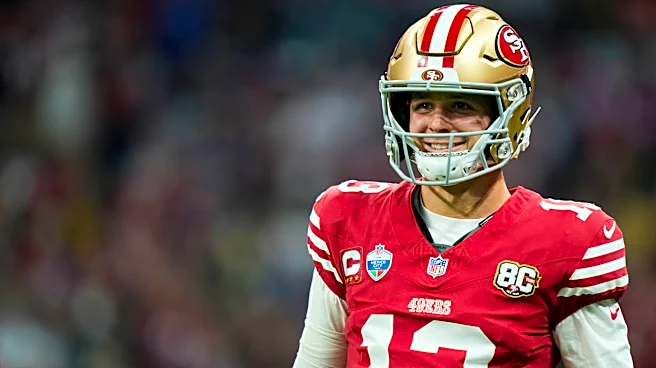
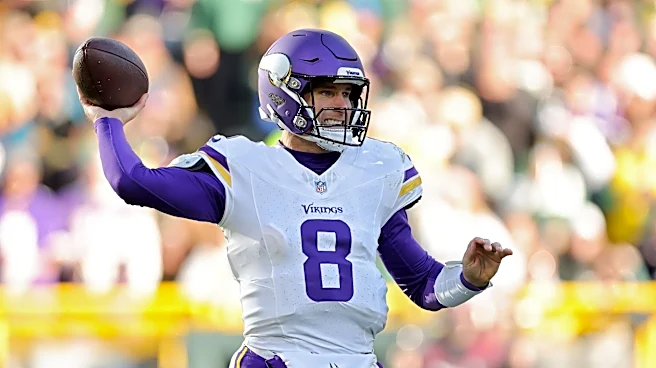
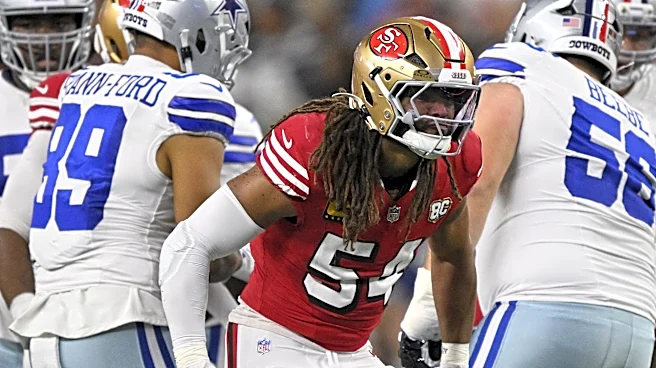
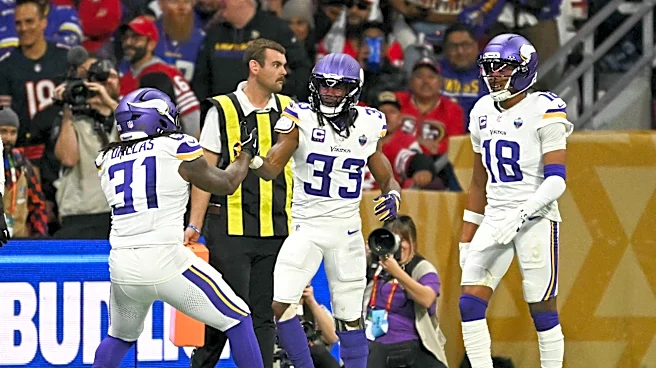
The Minnesota Vikings suffered a significant 35-10 defeat against the San Francisco 49ers in Mexico City, a game that highlighted the Vikings' lack of quality depth, particularly compared to their opponent.
The high-altitude environment of Mexico City, at 7,350 feet above sea level, necessitated increased player rotations, bringing more depth players onto the field. While the 49ers, who also faced injuries, seamlessly integrated depth players like Vederian Lowe, the Vikings struggled. For instance, when starting tackle Christian Darrisaw left with a shoulder injury, veteran Ryan Van Demark stepped in and recorded the second-lowest PFF score of the night at 30.3. Similarly, other rotational and backup players for the Vikings, such as Gavin Bartholomew and Joe Huber, showed inconsistency, with Bartholomew posting the lowest PFF grade at 28.4.
Why It's Important?
This loss and the performance of the Vikings' depth players underscore a critical issue in roster construction for NFL teams. The ability to maintain performance despite injuries and environmental challenges, as demonstrated by the 49ers, is a hallmark of a strong team. For the Vikings, the game revealed that their current roster lacks the necessary quality backups to step up when starters are unavailable or fatigued. This deficiency can significantly impact a team's long-term success, especially in a physically demanding sport like football where injuries are common. The reliance on inconsistent depth players can lead to a decline in overall team performance and potentially affect their playoff aspirations. The game also highlighted the importance of strategic preparation for unique conditions, such as high-altitude games, where depth becomes even more crucial.
What's Next?
The Minnesota Vikings will likely need to re-evaluate their roster strategy, particularly focusing on developing and acquiring quality depth players. The performance of their 2026 draft class, which saw increased playing time but did not significantly stand out, suggests a need for more emphasis on rookie development and integration. Moving forward, the team may prioritize drafting and signing players who can contribute effectively in rotational roles or as immediate backups. This could involve a more aggressive approach in free agency or the draft to address specific positional needs where depth was exposed. The coaching staff will also need to assess how to better prepare players for challenging conditions, ensuring that all members of the roster are ready to perform when called upon.
Beyond the Headlines
The Vikings' situation reflects a broader challenge in professional sports: balancing immediate competitive success with long-term roster sustainability. Teams often face the dilemma of investing heavily in star players versus building a robust, deep roster. The Mexico City game serves as a stark reminder that even with top-tier talent, a lack of reliable depth can be a significant vulnerability. This extends beyond just player performance to the strategic decisions made by front offices regarding scouting, player development, and salary cap management. The incident could prompt a deeper look into the effectiveness of the Vikings' player evaluation processes and their approach to cultivating talent beyond the starting lineup, influencing future team-building philosophies across the league.